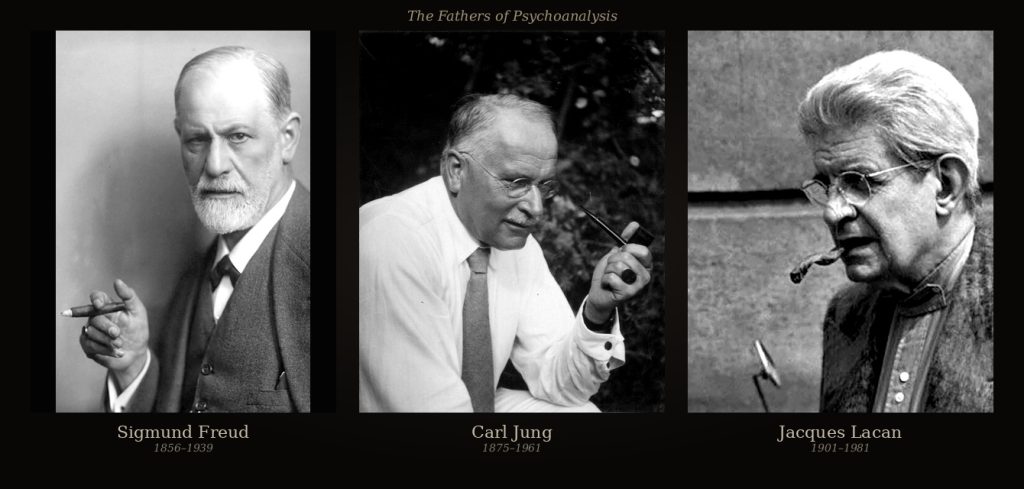
This post explores the way in which Sigmund Freud, Carl Jung and Jacques Lacan changed the way artists understood the mind, meaning and desire. Their combined insights were, without doubt, the most significant contribution to art since the start of the 20th century
Sigmund Freud (1856-1939)
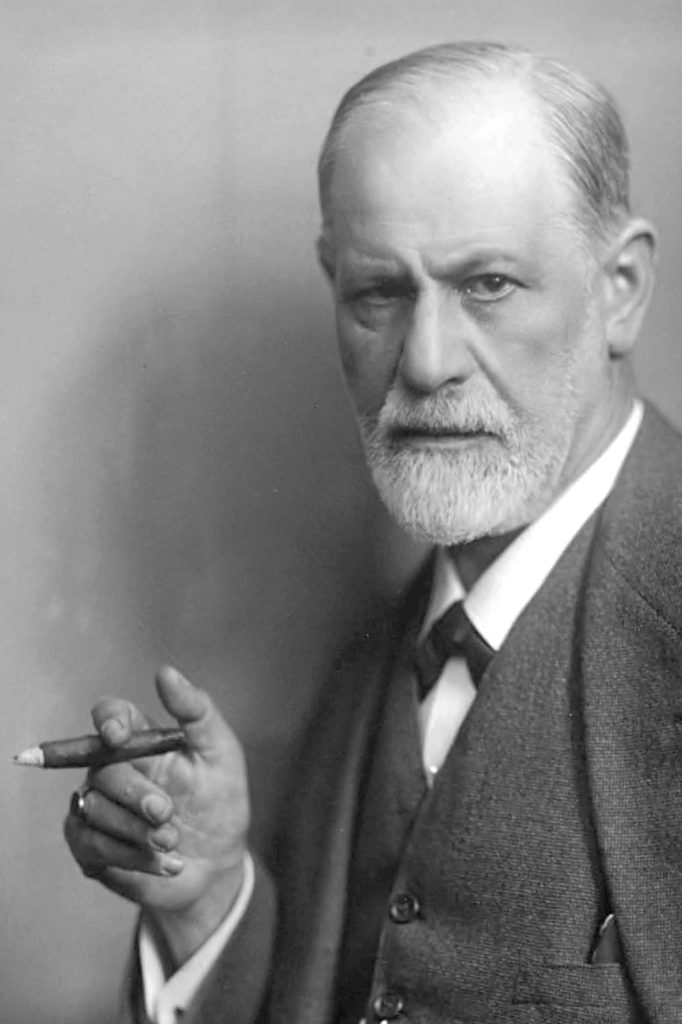
His book “On Dreams”, (an abridged version of his weighty academic tome “Interpretation of Dreams”), brought the idea of dreams and dream symbolism to the attention of a wider audience. It also shocked the world with its central claim:
- “We are not in control of our thoughts.”
Instead, psychosexual drives formed in childhood shape our adult personality, desire, behaviour and, collectively, culture as a whole
Freud’s concepts of the id (representing unconscious desire), ego (rational consciousness) and superego (social morality) were the base upon which the surrealists sought to create an art that represented more than merely the visually accessible physical world
Before Freud European art assumed that images should be coherent with stable meaning, and sexuality should be either idealised, moralised, or absent. Freud destroyed these assumptions, allowing:
- paradoxical juxtaposition representing the illogical associations of dreams
- irrational images, often with symbolic substitution, revealing psychic truth
- erotic ambiguity as symbols of desire appear simultaneously attractive and disturbing
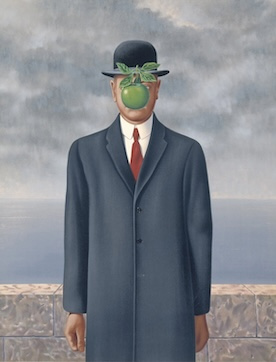
René Magritte’s 1964 “The Son of Man”, right, shows paradoxical juxtaposition with the apple in front of the face and the man’s left elbow backwards, creating a sense of uneasy isolation
Freud was, without doubt the single biggest influence on the surrealists and art in general. Jung and Lacan made important contributions and refinements but the initial heavy lifting was done by Freud
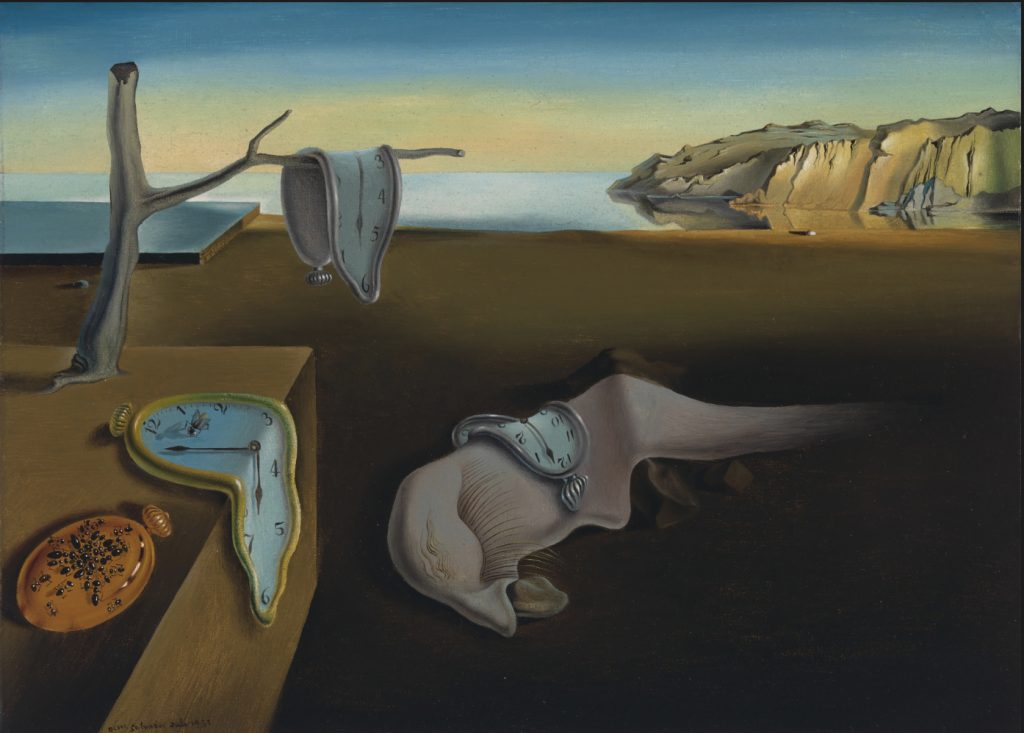
“The Persistence of Memory”, Salvador Dali 1931, is a dreamscape with symbolic substitution: soft clocks being a nod to Einstein’s Theory of Relativity, ants representing moral decay, and the notorious self-portrait in the middle referencing his earlier paintings and Hieronymous Bosch’s The Garden of Earthly Delights
André Breton (1896-1966)
Breton, the founder of Surrealism, started life as a medical student with a special interest in metal illness
During WWI he was conscripted and worked as a nurse in a mental ward treating victims of PTSD (“shell shock”) where he encountered Freud’s psychoanalytical approach and was fascinated by his theories of the unconscious
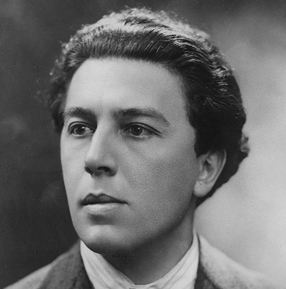
The essence of Breton’s Surrealist Manifesto was:
“Psychic automatism in its pure state, by which one proposes to express ― verbally, by means of the written word, or in any other manner ― the actual functioning of thought. Dictated by the thought, in the absence of any control exercised by reason, exempt from any aesthetic or moral concern”
This translates in Freudian language, almost exactly as: “to express thoughts (art) from the id without conscious interference from the ego (reason & aesthetics) or superego (moral concerns or desire to conform with society)”
Carl Jung (1875-1961)
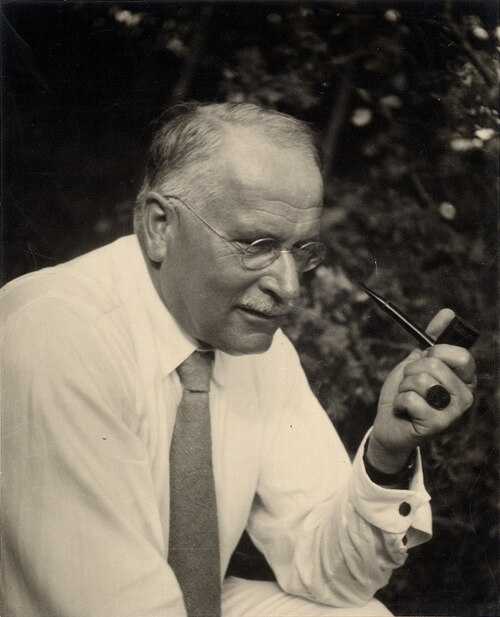
Jung argued that beneath the personal unconscious lies a deeper collective unconscious populated by patterns of symbols (“archetypes”) that reoccur across myths, religions, dreams and art. An example archetypes might be the hero and the shadow. The shadow representing those parts of our psyche that we refuse to acknowledge. Example archetypal patterns are: the journey of the hero: departure from the ordinary world, encounter with trials, danger and darkness, transformation, return a greater person; or triumph of the hero over the shadow
Whilst raised as a christian, he was a highly spiritual man, with a practical rather than academic or dogmatic faith. He also had a lifelong interest in the occult and alchemy where he used to read ancient latin texts
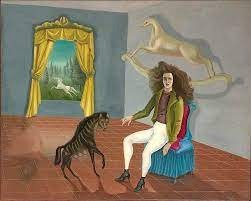
Leonora Carrington’s 1938, Self Portrait (Inn of the Dawn Horse), right, display Jungian mystic symbolism:
- Horses symbolise freedom and liberty and are used here to show her animal self
- The hyena is a scavenger in a domestic space
- The floating rocking horse is probably a reference to the play she wrote about a young girl in love with her rocking horse
Theosophy, as a philosophical and mystic movement that promotes divine wisdom, is in some ways a parallel concept to that of the collective unconscious. Advocates include artists such as Hilma af Klint, Wassily Kandinsky and Piet Mondrian who believed that abstraction could reveal an underlying spiritual order. Whilst Jung was not directly involved with these artists, their work is frequently interpreted in Jungian terms
Freud’s view of Jung
Jung had a close association, and frequent correspondence, with Freud early in his career. Freud saw Jung both as his heir, further developing his research, and as a route to publishing his theories, an activity denied to Freud who was persecuted as a Jew
However, Freud viewed psychoanalysis as a scientific theory grounded in sexuality and repression, whereas Jung increasingly emphasised mythology, religion and archetypal symbolism
Jung’s view of Freud
Jung did not agree with Freud’s over dependence on psychosexuality, and the two parted company ideologically when Freud refused to accept any of Jung’s ideas on the collective unconscious. Their disagreement became irreconcilable and led to a permanent split in 1913
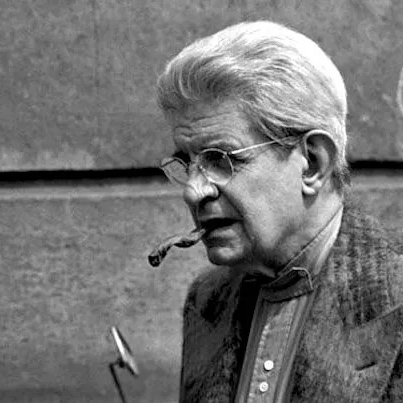
Jacques Lacan (1901-1981)
Jacques Lacan was one of the first celebrity intellectuals and was often referred to as the “French Freud.” He moved in the same Parisian avant-garde circles as André Breton and fascinated the surrealists both with his psycho-philosophical theories and visualisation such as the conscious/ unconscious mind as a möbius strip
The Unconscious Structured Like a Language
Influenced by the French structuralist philosopher Claude Lévi-Strauss (1908-2009), who was himself influenced by the linguist and semiotician Ferdinand de Saussure (1857-1913):
- Saussure theorised that words & symbols only have meaning in relation to other words & symbols
- Levi-Strauss extended this to myth and culture, thereby formalising “Structuralism”
- Lacan applied the above to the unconscious and desire using the 3 kinds of symbols: “Registers” defined below
- [Later linguists such as Barthes, Derrida, et al, suggest that a text (in the broadest sense which includes pictures) only have meaning in the context of other texts (or metatexts). See my earlier post “Roland Barthes’ Camera Lucida“]
Lacanian Registers:
- The “Symbolic” – rules, laws and societal beliefs that define how one views the world
- The “Imaginary” – what one sees and experiences
- The “Real” – that which is beyond our reach/ influence
The Real parallels Kantian philosophy: Kant’s unknowable reality becomes, in Lacan, the traumatic kernel that resists symbolisation and disrupts experience. This is manifest, in a psychoanalytical sense, in Slips-of-the-Tongue, Anxiety, Repetition, and Trauma
Theory of Desire
Lacan was also influenced by Alexandre Kojève (nephew of Wassily Kandinsky) who combined the work of Hegel, Heidegger and Marx to create a theory of social desire:
- Human desire: desire for recognition (from another consciousness), structured by lack, and played out through social and historical relations
Lacan extended the above to a theory of unconscious desire
Involvement with Freud and Jung
Freud’s concept of the unconscious revolves around the individual; whereas Lacan considers the role of society in shaping people’s personality. A concept that has made him popular with the political left
Lacan was suspicious of Jung’s concept of universal truths as represented in archetypes with timeless symbolic meaning. Preferring instead the idea that such beliefs are the interplay between language, culture and historical structures. This is a linguistic concept where meaning changes over time, and is a direct result of the unconscious being structured like a language
Involvement with the Surrealists
In 1924 (when Breton wrote the first Surrealist Manifesto), Lacan was living in Montmartre, the heart of the artistic avant-garde, although their is no evidence of any king of friendship, they almost certainly knew each other and shared a common interest in and admiration for Freud
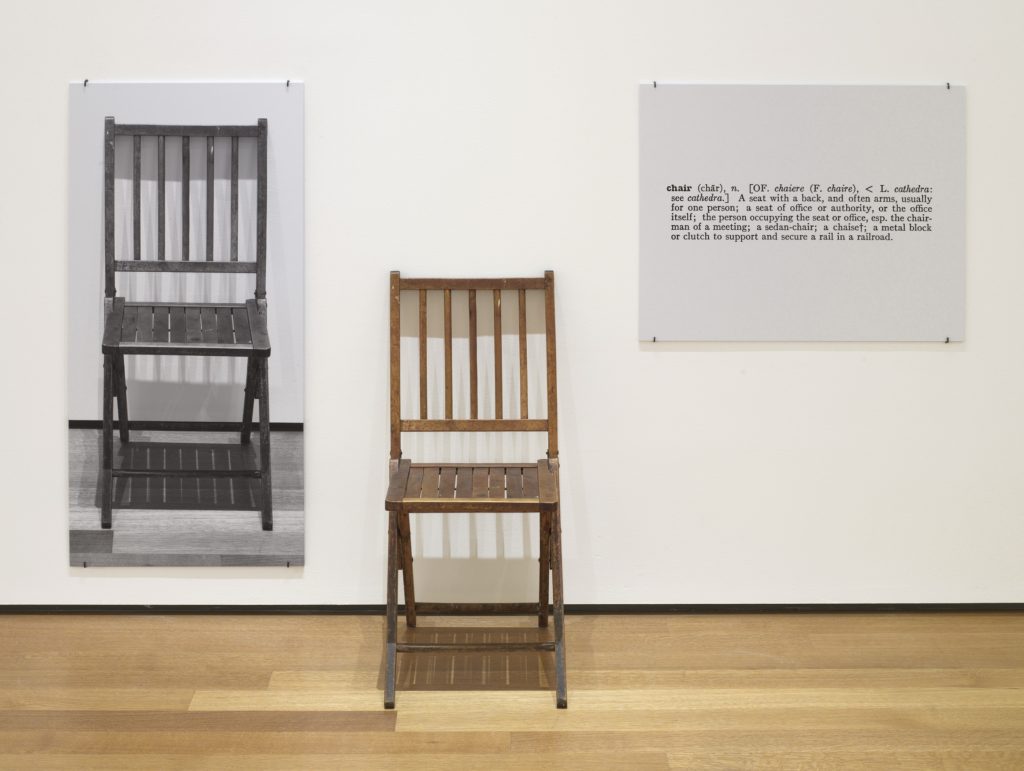
Lacan’s theories of the mind being structured like a language lead to a Joseph Kosuth’s investigation into meaning:
“One and Three Chairs”, 1965, right is an installation of object, image and words. In this Kosuth challenges the viewer as to consider the validity of each element
This is usually considered conceptual rather than surrealist art, but compare this with Magritte’s Treachery of Images where the image is not a pipe and the word “pipe” is not a pipe
In Lacan’s case surrealism may have influenced psychoanalysis, rather than vice-versa. His interests in surrealism pre-dated his interests in psychoanalysis and led to his describing “madness as convulsive beauty”, celebrating its irrationality, and he later promoted provocation as an important element in psychoanalysis
Summary: Influence of the Psychoanalysts on 20th Century Art
Freud, Jung and Lacan each transformed how we think about the mind, but in very different ways:
- Freud’s greatest contribution was the idea that beyond rationality, our behaviour is driven by hidden forces of repressed wishes, fantasies and desires. He encouraged artists to look inwards. As Max Ernst put it: “keep one eye on the outside world, and with the other look within yourself”
- Jung expanded Freud’s vision beyond the individual and contributed mystic symbolism that resonates with the abstract artists
- Lacan identified that our desires are always the desires of somebody else; that meaning is never complete and identity is unstable. This is enormously important for conceptual art and post-structuralism
Together these three thinkers fundamentally altered how artists understood human experience. Freud gave modern art its dreams, Jung its myths, and Lacan its theories of language, desire and representation