• Home
  • About Me
    • Photography – Style, Philosophy and Aspirations
    • Press
    • Photographic Equipment
      • Cameras and Lenses for 10,000 Hours of Deliberate Practice
      • Tripods, Stands, etc.
      • Flashes and Lighting Modifiers
      • My Kit at Zero Hours
    • Other than Photography – 2025
    • Other than Photography – 2017
    • Who was Andy Smith in 2017?
  • About this Project
    • Purpose of this Blog
    • Why 10,000 Hours
  • Galleries
  • Journal of 10,000 Hours
    • August 2026
    • July 2026
    • June 2026
    • May 2026
    • April 2026
    • March 2026
    • February 2026
    • January 2026
    • 2025
      • December 2025
      • November 2025
      • October 2025
      • September 2025
      • August 2025
      • July 2025
      • June 2025
      • May 2025
      • April 2025
      • March 2025
      • February 2025
      • January 2025
    • 2024
      • December 2024
      • November 2024
      • October 2024
      • September 2024
      • August 2024
      • July 2024
      • June 2024
      • May 2024
      • April 2024
      • March 2024
      • February 2024
      • January 2024
    • 2023
      • December 2023
      • November 2023
      • October 2023
      • September 2023
      • August 2023
      • July 2023
      • June 2023
      • May 2023
      • April 2023
      • March 2023
      • February 2023
      • January 2023
    • 2022
      • December 2022
      • November 2022
      • October 2022
      • September 2022
      • August 2022
      • July 2022
      • June 2022
      • May 2022
      • April 2022
      • March 2022
      • February 2022
      • January 2022
    • 2021
      • December 2021
      • November 2021
      • October 2021
      • September 2021
      • August 2021
      • July 2021
      • June 2021
      • May 2021
      • April 2021
      • March 2021
      • February 2021
      • January 2021
    • 2020
      • December 2020
      • November 2020
      • October 2020
      • September 2020
      • August 2020
      • July 2020
      • June 2020
      • May 2020
      • April 2020
      • March 2020
      • February 2020
      • January 2020
    • 2019
      • December 2019
      • November 2019
      • October 2019
      • September 2019
      • August 2019
      • July 2019
      • June 2019
      • May 2019
      • April 2019
      • March 2019
      • February 2019
      • January 2019
    • 2018
      • December 2018
      • November 2018
      • October 2018
      • September 2018
      • August 2018
      • July 2018
      • June 2018
      • May 2018
      • April 2018
      • March 2018
      • February 2018
      • January 2018
    • 2017
      • December 2017
      • November 2017
  • Blog Posts
  • Photo10KH

Ten Thousand Hours Photography

10,000 Hours Deliberate Practice Learning the Art of Photography

Thoughts on Art: 2026

29/07/2026

Defining art

Thoughts on art, the artist tormented by the responsibility of their work

Following on from previous attempts at defining art, this post has been prompted by my recent encounter with 3 controversial statements:

  1. Matt of the vlog channel Creative Deep Dents, who categorizes abstract art by the motivation of the artist to enhance the impact on one of the following:
    • The Eye: visual experience
    • The Heart: emotional directness
    • The Spirit: expression of the unconscious in the Jungian sense, including the supernatural and collective unconscious
    • The Mind: ideas and concepts that are more important than the expression them – “makes you think, doesn’t it?”
    • The World: art that influences society
  2. David Hockney, “Does art progress? Not many think it does do they?”
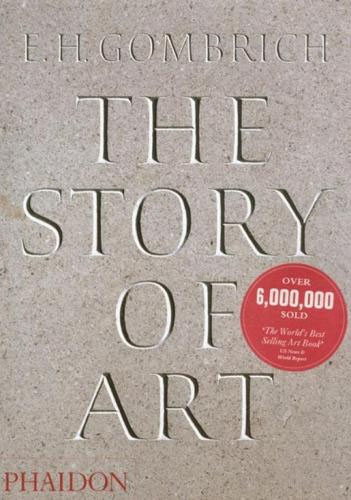
  3. Professor Sir E.H. Gombrich, whose magnum opus “The Story of Art” opens with the line: “There really is no such thing as art. There are only artists” and by page 630 concludes that “the more we generalize about art, the more likely we are to go wrong”
Read more: Thoughts on Art: 2026

Creative Deep Dents: 5 Motivations

If we start with Matt’s 5 motivations. I think this is a useful framework for interpreting not only completely non-objective art, but anything where the purpose is more than to record a factual statement of what something looks like. It is perhaps interesting to consider my definition of art when I started this project as merely “emotional communication.” [See “What is Art?” 31/10/2017]. So this framework feels more complete.

Image from my Royal Photographic Society Associateship panel in Landscape Photography

As a landscape photographer, the tools at my disposal when trying to find, what Melissa Brown calls “pearls of abstract art in the natural environment” are:

  • framing, including depth of focus, to determine what to include/ exclude
  • viewpoint and lens choice, to organise the elements in the picture

[I exclude from this list “waiting for the right light”, which, whilst undoubtably important, is not within the photographer’s control]

My objective when creating the image, left, for my Associate panel for the RPS, was to capture the meditative mood and sense of melancholy. There is no sky and the morning mist hides all but a small isolated group of trees

So in Matt’s terms my primary motivation with this image is to influence The Heart

As a creative photographer, I have more control:

  • slow shutter speeds allow me to blur some or all of the image
  • combine and rearrange elements from multiple images

The key question is: why am I doing this? Blurred images can be address motivations to influence the Eye, Heart or Spirit. Whereas the rearrangement of elements, as in my Magritte inspired work, is usually for conceptual reasons

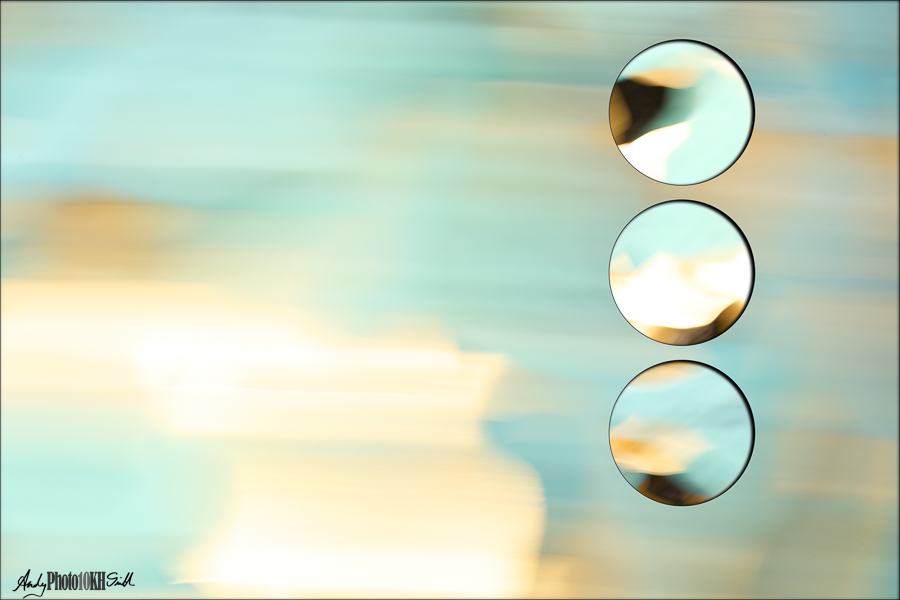
My motivations with “Three Dots Morning Portal” were:

  1. The Eye: a visually interesting picture
  2. The Mind: explore the concept of a portal representing a point of departure from one state to another
  3. The Spirit: inviting the viewer to explore the image from a meditative state

This is an attempt to step towards what Rothko described as “not a picture of an experience, but a picture that is the experience”
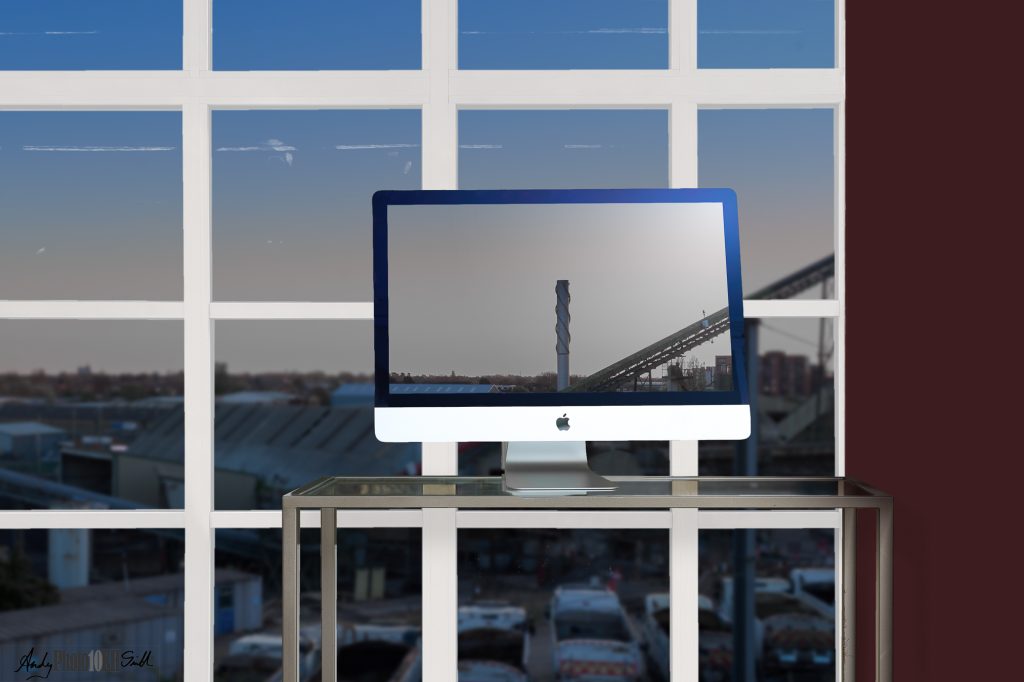
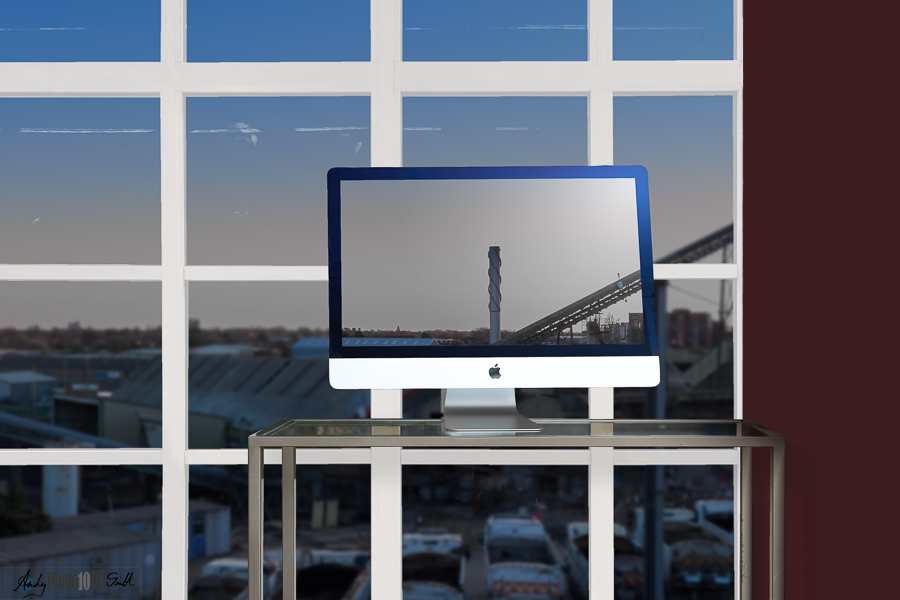
My Fellowship panel image “The Industrial Human Condition”, left, is a reinterpretation of Magritte’s 1933 “The Human Condition.” Both picture show a screen (painting in Magritte’s case), showing exactly that portion of the landscape outside the window that it, itself hides. As Magritte said, “everything we see hides another thing, and we always want to see that which is hidden by what we see”

In my picture we are in a comfortable, if slightly sterile, modern room, viewing the dystopian world outside on our high-end computer screen

My motivation, like Magritte’s, was to influence The Mind

The World: As far as is possible my work is politically neutral and I do not attempt to influence society with my pictures. For well known contemporary examples I point to the works of Banksy or Jean-Michel Basquiat, or the many artists highlighting the injustice perpetrated on minority groups
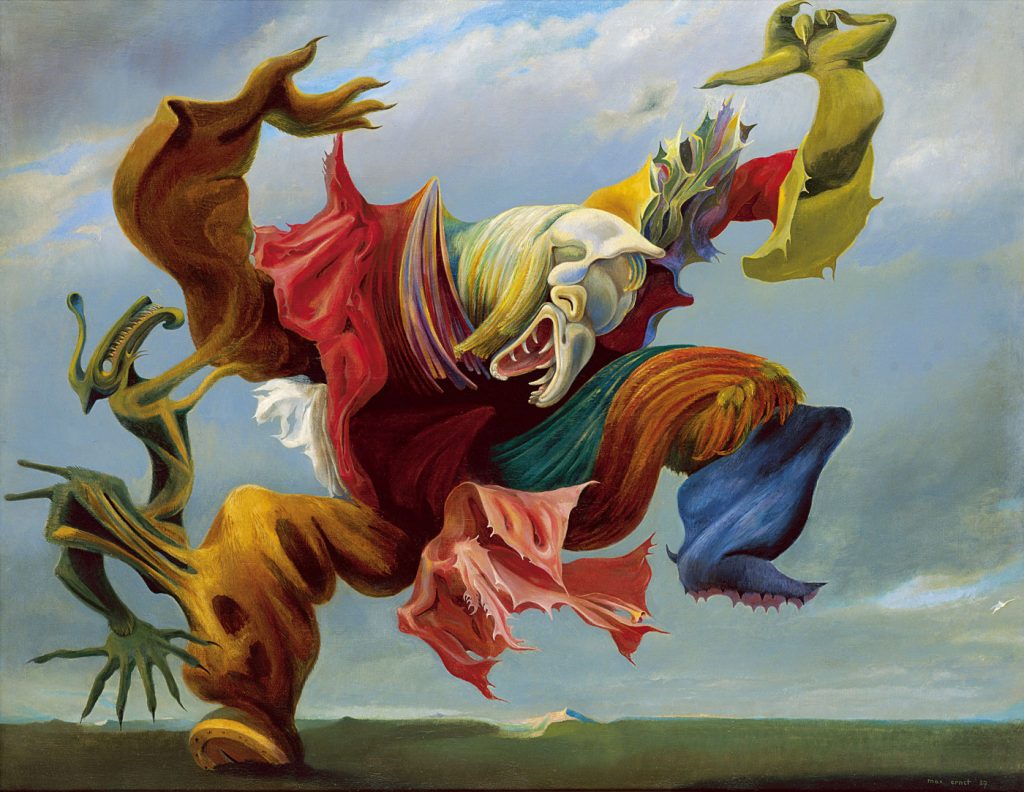
Max Ernst’s, 1937, “Fireside Angel”, often called “The Failure of Surrealism” warns against the rise of fascism

Both Dada and Surrealism were closely linked with socialism. André Breton travelled to Mexico to meet Trotsky and co-authored the Manifesto for an Independent Revolutionary Art with him and Diego Rivera. Salvador Dali, by contrast, was expelled from the French Surrealists for his close ties with the fascist Francisco Franco

David Hockney: “Art Does Not Progress”

In his book, A History of Pictures, Hockney says “Does art progress? Not many really think it does, do they?” From this it is important to provide a bit of context:

  • Hockney uses the term Art almost interchangeably with Picture-making
  • Art is contrasted with science where later knowledge supersedes and improves upon earlier knowledge. New tools or techniques in art, expand the vocabulary without diminishing, or making obsolete, earlier works
  • Progress implies a cumulative directional model

The above does leave room for art (as defined by Hockney, i.e., the resulting picture) to “get better” or “improve” with the advancement of new tools and techniques.

If we define art in terms of the motivation of the artist producing the work, this is then separated from the tools and techniques they employ. So art then, fundamentally, does not change

Art is again defined by the motivation of the artist

E.H. Gombrich

Professor Sir Ernst Hans Josef Gombrich is arguably the most influential art historian of all time. His book, “The Story of Art”, originally Written in 1950, is still regarded as the most accessible introduction to art history. The book is also famous for its opening statement:

There really is no such thing as art. There are only artists”

This strikes me as entirely consistent with the above
Review and Critic of Previous Posts

Learning the Art of Photography Through Ten Thousand 10,000 Hours of Deliberate Practice Photo10KH P10KH Photography10KH Sony Alpha A99ii A-Mount

My first post, “What is Art?“, written in October 2017 just before the start of this 10,000 hour project, suggested that art might be defined simply as “emotional communication”. At the time I felt that this was flawed, I see now is both incomplete and frankly wrong

My second post: “Revised Thoughts on Art“, written in July 2023, was much more academic and included various theories of art in a historical context, and some practical tips for differentiating good art from bad. It conclusion that:

  • “Art is the property of a work that conveys a truth, beyond the merely factual, that appeals to our basic human psyche”

Consistent with the first 3 definitely, 4 maybe, of the Creative Deep Dents motivations
Conclusion – Revised Definition

My previous definition is made less vague and more useful, if expressed in terms of the artist’s motivations:

  • “Art is that quality of a work which, devoid of objective representation and technical skill, stimulates in the viewer an emotional, spiritual, or philosophical response”

I have excluded both the first and the last of the Creative Deep Dent motivations on the following grounds:

  • a visually stimulating image, such as the work of Bridget Riley, triggers both an emotional and philosophical response. Op art amuses us with perceptual tricks; similarly, cubism pleases us with a rearrangement or distortion of pictorial elements
  • using one’s work to change the world, is not, in my opinion, a determinant of artistic merit

By separating art from, the thing that is being represented (if anything), and the techniques and skill with which that representation is created, we have defined, or at least honed in on, it’s otherwise ineffable nature. It is also easier to identify with Hockney’s contention that this hasn’t changed since the days of cave painting

However, I am chastened by Professor Gomrich’s later comment:

  • “the more we generalize about art, the more likely we are to go wrong!”

Filed Under: Art Theory

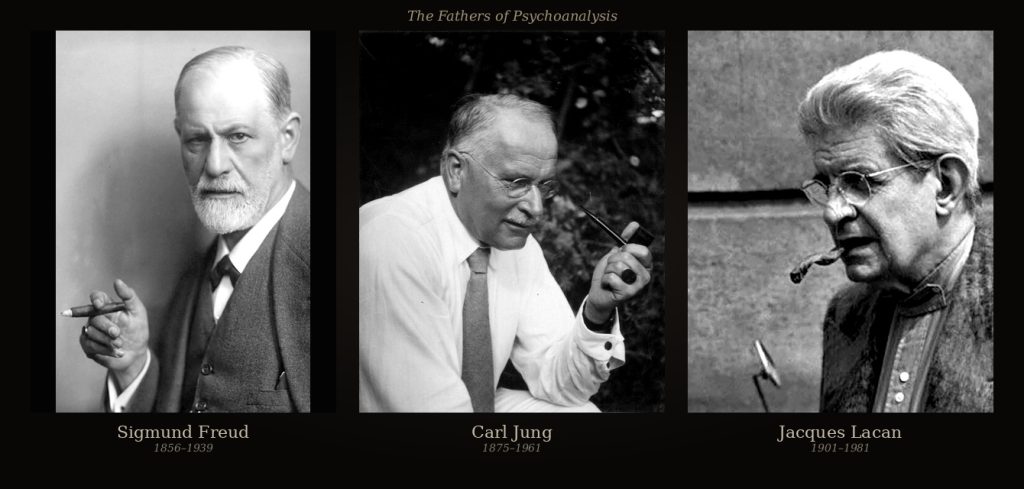
Freud, Jung and Lacan

31/05/2026

This post explores the way in which Sigmund Freud, Carl Jung and Jacques Lacan changed the way artists understood the mind, meaning and desire. Their combined insights were, without doubt, the most significant contribution to art since the start of the 20th century

[Read more…]


Filed Under: Art Theory

Surrealism 100 Years on

20/04/2025

Introduction

A simple history of Surrealism might state that it was:

  • conceived from the trauma of the 1st World War
  • born (1924) in the depression between the wars
  • developed through the 2nd World War, and
  • died in the relative peace and economic prosperity of the late 1960s

… leaving an enduring legacy

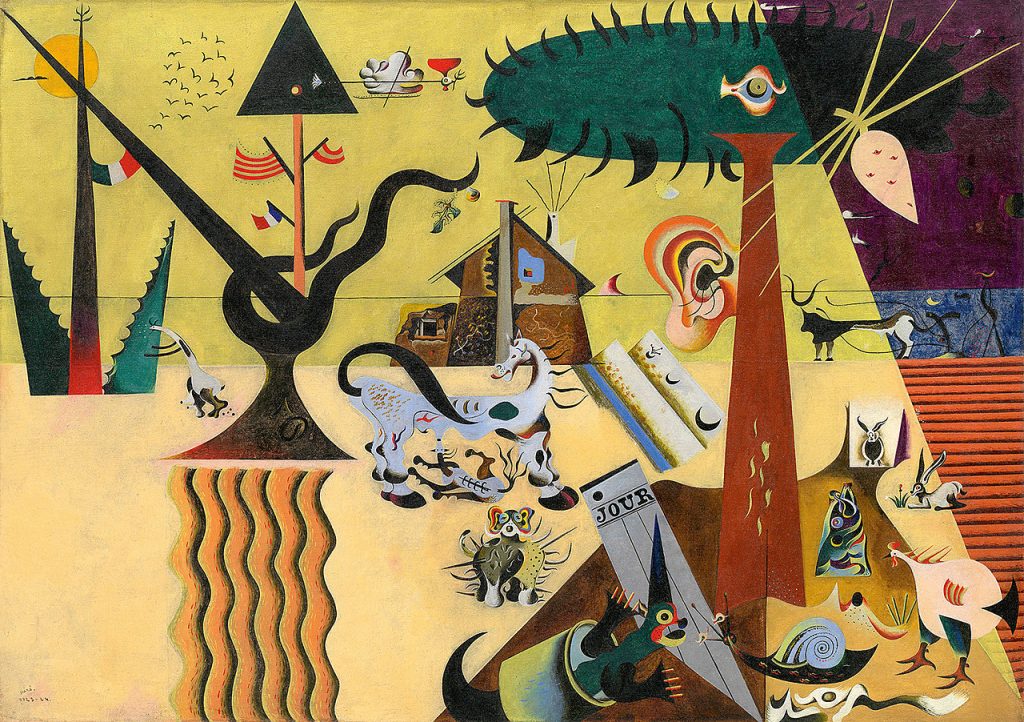
Above right, Joan Miro’s 1923 The Tilled Field which is generally regarded to be the first Surrealist painting – now in the Guggenheim Museum, NY

This post aims to expand on the above to give a history of the movement from 1915 up to the current day, including an overview of the political and social climate that influenced each stage of its development:

  • WWI, Zurich, 1915: Dada, Surrealism’s Artistic Precursor
  • Europe in 1924
  • The Basis of Surrealism
  • Artistic Variation and Sub-Genres
  • WWII: Paris to New York
  • Formal Disbandment and Enduring Influence
  • Global Issues of 2024/5
  • Relevance of Surrealism Today

WWI, Zurich, 1915: Dada, Surrealism’s Artistic Precursor

It is important to differentiate Surrealism, which has a serious and intellectual underpinning, from Dada, its more frivolous precursor. Dada was reactionary; it started in Zurich, in 1915, in the middle of the Great War, as an anti-art, anti-establishment, anti-everything, movement

Conventional logic and rational thinking, it was argued, had led to the horrendous state the world was in. Therefore, the solution resided in the intentionally irrational1, and the movement was specifically against:

  • traditional aesthetics
  • rational philosophy
  • bourgeois capitalist society
  • fascism
  • organised religion

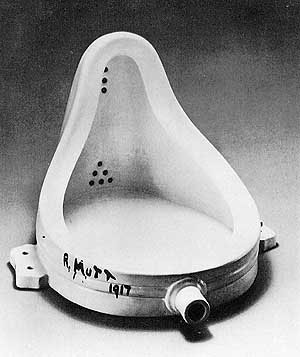
Right, Marcel Duchamp’s “Fountain” which is often cited as exemplary Dadaist

As Hugo Ball put it: “art is not an end in itself … but it is an opportunity for the true perception and criticism of the times we live in”


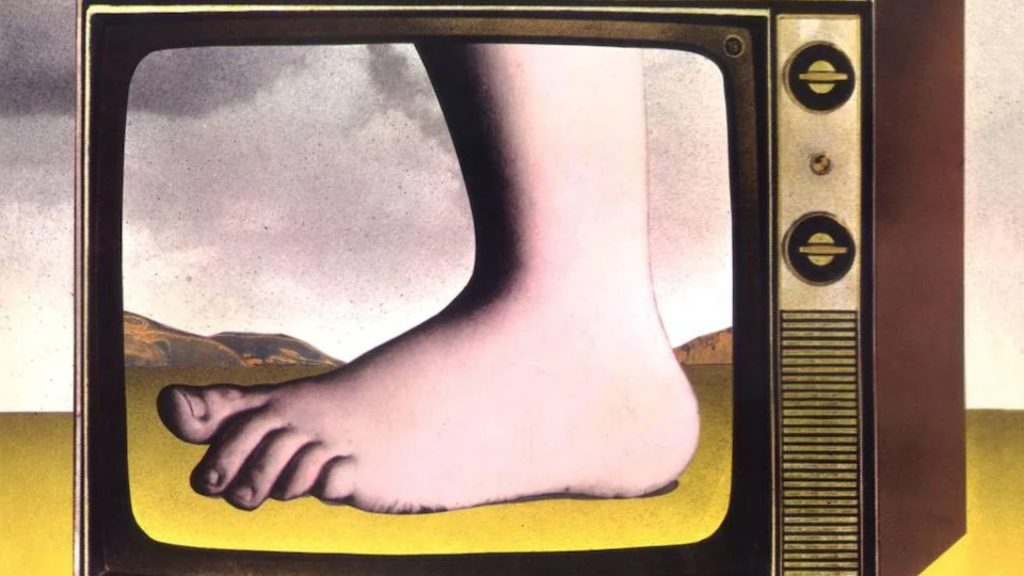
Dadaist humour is exemplified by Monty Python: the concept of a cheese shop with a bouzouki player but no actual cheese is fundamentally Dadaist

More recently, absurdist memes have become a mainstay of internet culture and contemporary live performance, particularly for protest or activist purposes

Europe in 1924

For Europe the period between the two world wars was a time of dramatic change

Politically, whilst the upper and middle classes were enjoying the “Roaring Twenties”, the populace of Europe faced grinding poverty. Food shortages and unemployment spawned civil unrest, and disillusionment with incumbent democracies led to political extremism on both the left and right

Artistically, despite the chaos there was a thriving “Modern” art scene. Art Deco was invigorating architecture and product design for the wealthy. This was itself influenced by the new painting styles of Fauvism & Cubism from France, Futurism from Italy, Vorticism from England and Constructivism & Suprematism from Russia. At the same time Germany was undergoing a similar artistic revolution with leaders including the Bauhaus

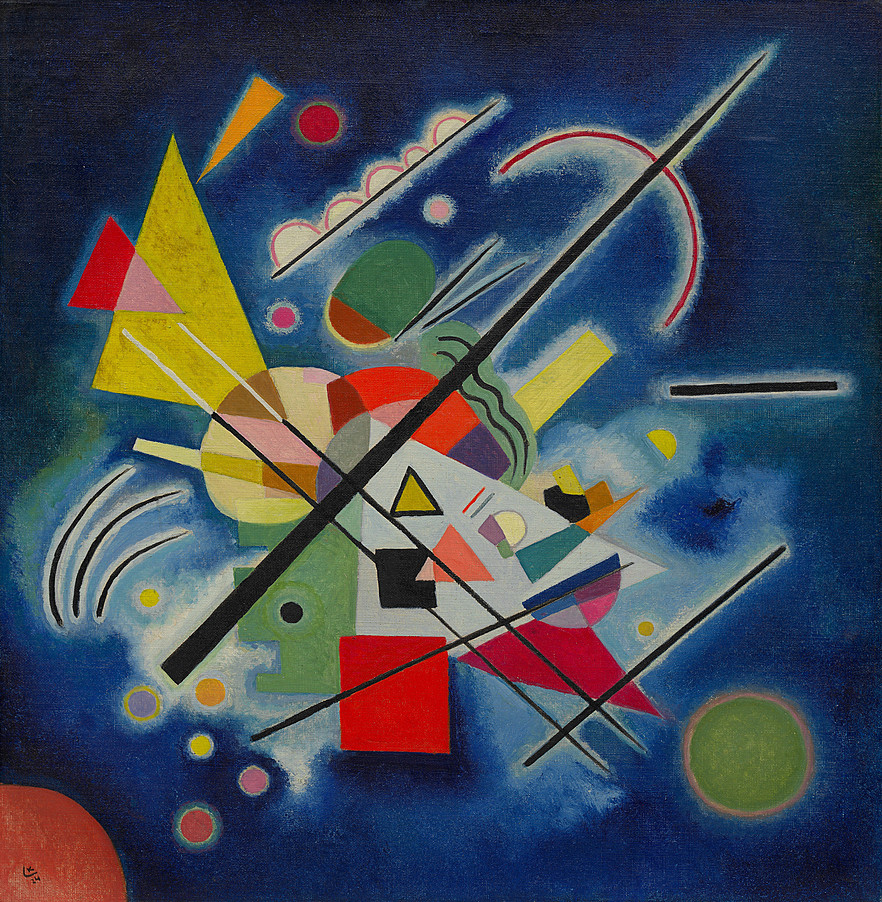
Left, Wassily Kandinsky’s 1924 Blue Painting, produced at the Bauhaus, now in the Guggenheim Museum, NY

Philosophically, Einstein, Freud, Lenin and Nietzsche were causing seismic shifts in thinking across physics, psychology, politics and morality

The Basis of Surrealism

Dada, intrinsically nihilistic and self-destructive, was officially all over by the end of 1923. Many Dadaists, particularly André Breton, were frustrated by its intentional meaninglessness and wanted to build on the theories of Sigmund Freud. In particular, they wanted to use automatism and dream analysis to access the truth and meaning of the subconscious, and in doing so create a genuinely greater art

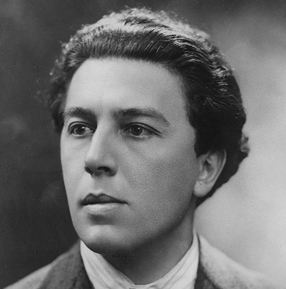
André Breton, right, defined Surrealism as:

“pure psychic automatism, by which one proposes to express, either verbally, in writing, or by any other manner, the real functioning of thought” – Surrealist Manifesto, 1924

The new features of Surrealism were:

  • Structured movement
  • Expressions of the subconscious mind
  • Symbolic juxtaposition

Hangovers from Dadaism included commitment to:

  • The liberation of thought and language from conscious control; automatic writing/ drawing/ painting, and embracing the element of chance
  • Art designed to unsettle and transgress boundaries
  • Politics of the far left, specifically Trotskyism – Freida Kahlo had an affair with Leon Trotsky when he and his wife visited Kahlo and Diego Rivera in Mexico – introductions possibly by André Breton

The combination of all of these elements produced truly unique and bizarre works of art. Many Surrealist artworks have stood the test of time and remain iconic images of the 20th century because of their unusual and visually arresting qualities

Artistic Variation and Sub-Genres

In his book, “The Lives of the Surrealist”, Desmond Morris defines 5 categories of surrealist artist:

Paradoxical surrealism

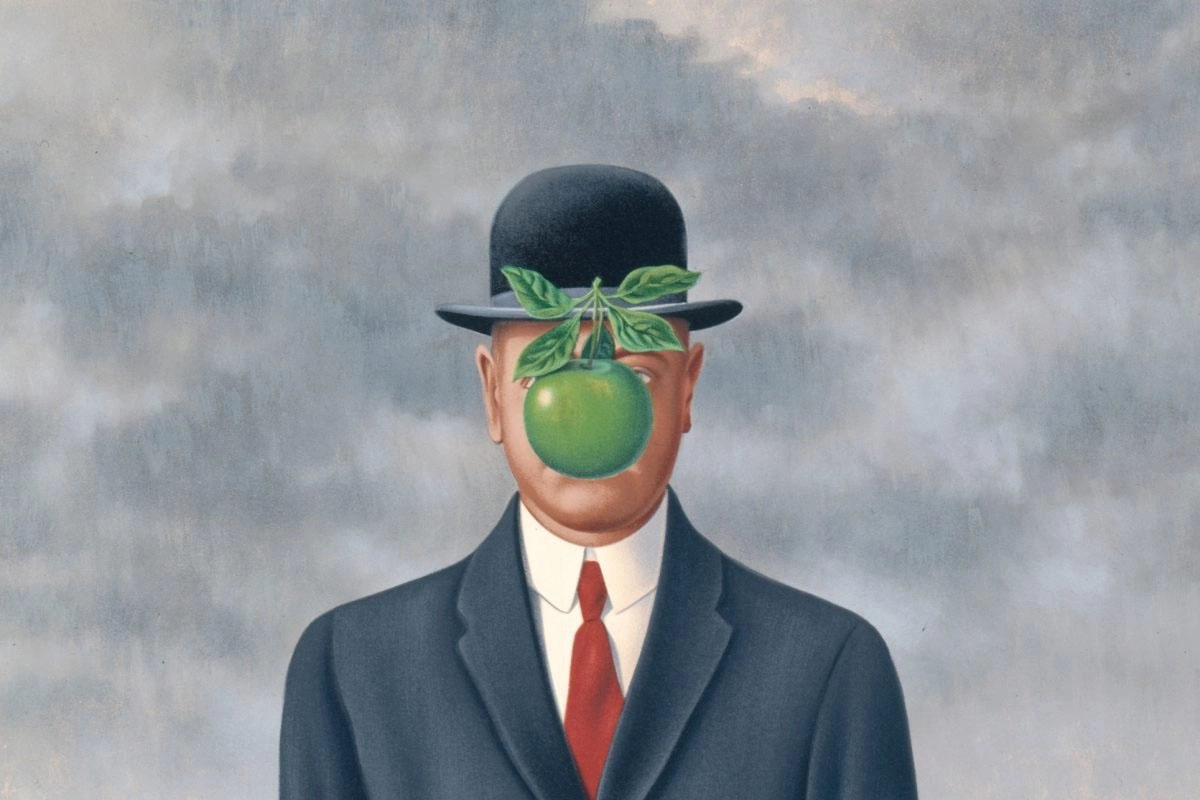
René Magritte, 1964, “Son of Man”

Elements are realistically portrayed, but in a context that removes them from their normal emotional association, creating an uncanny sense of unease
Son of Man
Atmospheric surrealism

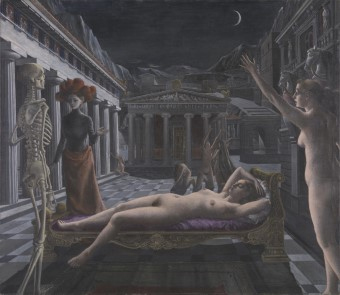
Paul Delvaux, 1944, “Sleeping Venus”

Objects again realistically portrayed but in an artificial and dreamlike context
1944, Sleeping Venus
Metamorphic surrealism

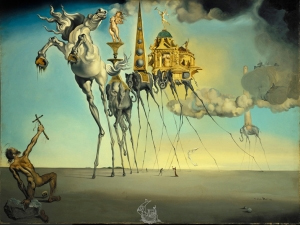
Salvador Dali, 1946, “The Temptation of St. Anthony”

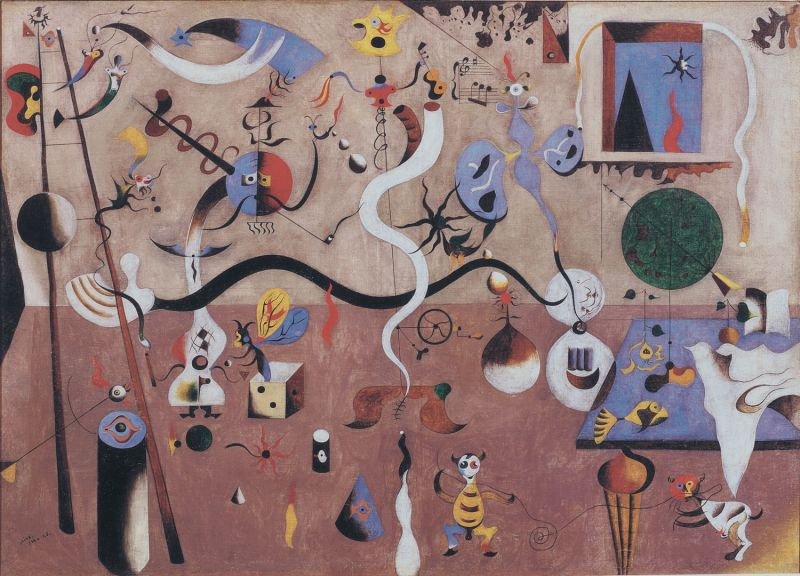
Jean Miro, 1925, “The Harlequin’s Carnival”

Objects are distorted by still recognisable; Dali, slight distortion, e.g., elephants with long legs; Miro to an extreme degree, so that the elements are represented by little more than hieroglyphs

[The religious subject matter of Dali’s painting is at odds with the official Surrealist stance against organised religion, that Breton thought to be oppressive. Similarly Dali’s implicit support for Franco’s dictatorship through his acceptance of honours and state-sponsored exhibitions, was in direct opposition to the Surrealist movement’s revolutionary Trotskyist position. He was formally expelled from the Surrealist movement, by Andre Breton, on more than one occasion during the 1930s]
Salvador Dali 1946 The Temptation of St Anthony

The Harlequin's Carnival 
Joan Miro
1924-1925
Biomorphic surrealism

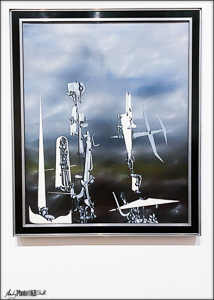
Yves Tanguy, “The Invisibles”, 1955, my photograph of the painting hanging in the Tate Modern, London

Figures that cannot be traced to a specific source, yet have a clear organic nature
Yves Tanguy, The Invisibles, 1955, Tate Modern London
Abstract surrealism

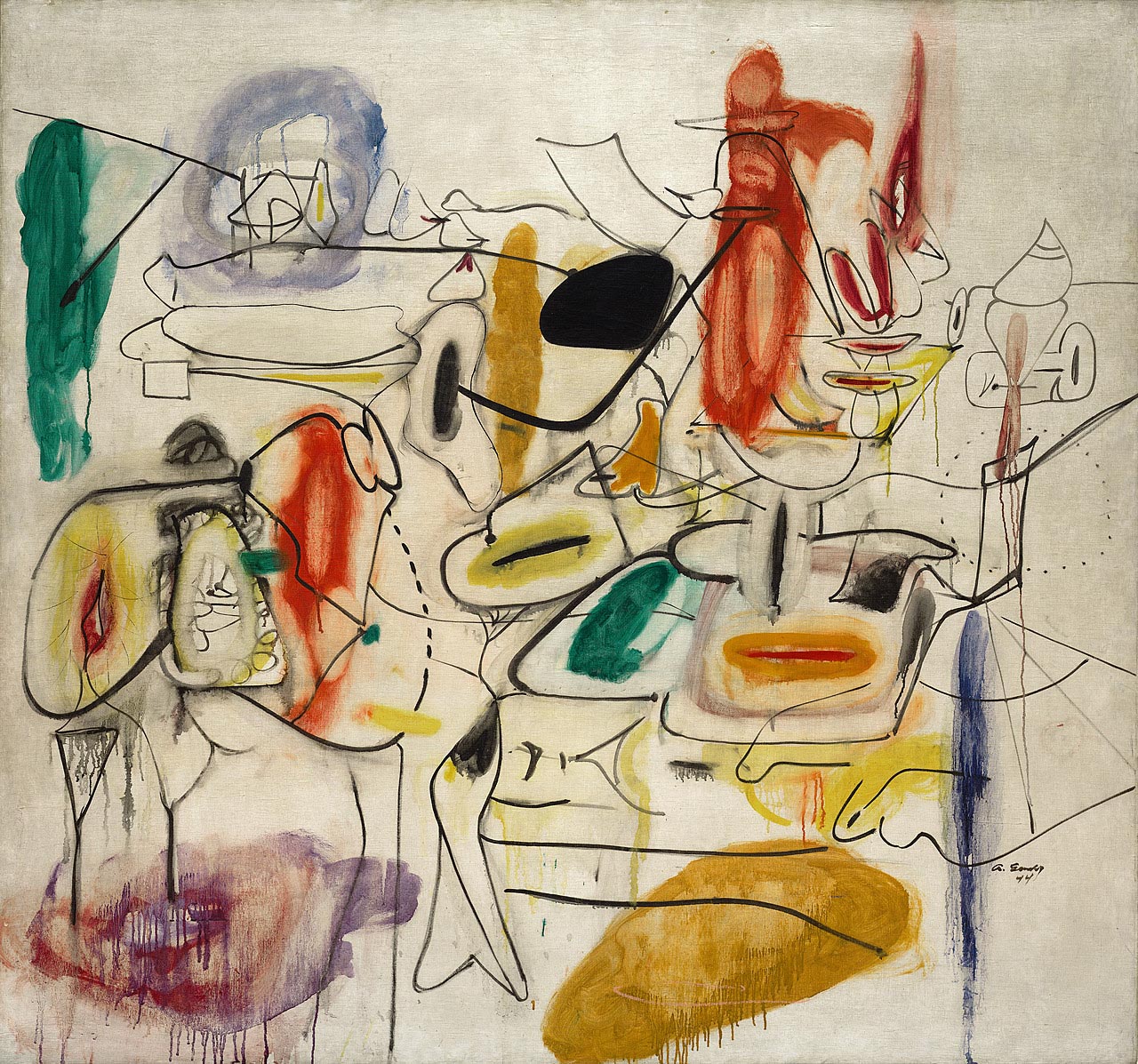
Arshile Gorky, 1944, Untitled
The Solomon R. Guggenheim Foundation
Peggy Guggenheim Collection, Venice

Abstract shapes with sufficient differentiation to make them more than merely a visual pattern
Arshile Gorky 1944 Untitled Abstract Surrealism

Paris to New York

The New York art world was aware of the Surrealist movement through exhibitions such as the MoMAs, 1936, “Fantastic art, Dada, Surrealism.” However, New Yorkers were less anti-aesthetic and anti-establishment than their Parisians counterparts. They also found many Surrealist works, with the exception of works by artists such as Joan Miro, lacking in artistic qualities. In general, they were more impressed by the Bauhaus and other Modernist movements of Europe and were busy assimilating those ideas

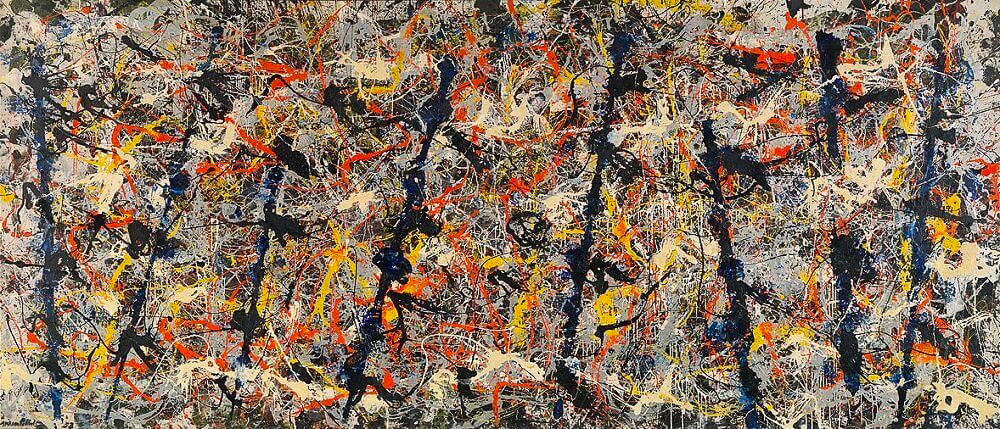
However, when Paris fell to the Nazis in June 1940, many of the Surrealists, along with other artists, fled to New York. Famous surrealist emigres include: André Breton, Marc Chagall, Piet Mondrian, Max Ernst, Yves Tanguy and Salvador Dali. Perhaps being faced with the Surrealists in the flesh caused the New York art world to reassess its position on the movement. Certainly, the concept of automatic painting as an means of accessing the subconscious became a unifying feature of the Abstract Expressionists

Jackson Pollock 1952 Blue Poles

Jackson Pollock, 1952, “Blue Poles”, beneficiary of surrealist influence

Although most of the Surrealist emigres returned to Europe after the war, New York’s position as the Art Capital of the world had been established. The vast economic superiority of the United States at that time, with c. 50% of the world’s GDP and 80% of its hard currency, meant that it remained home to the most influential (and deep pocketed) collectors, galleries and artists

Formal Disbandment and Enduring Influence

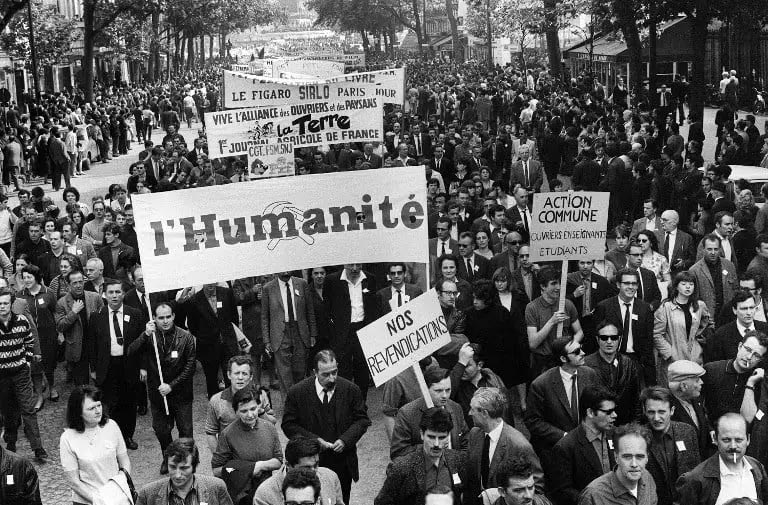
Mark Polizzotti, in his book “Why Surrealism Matters”, suggests that the symbolic high point of Surrealism was the May 1968 uprising in Paris. Lasting two months and involving eleven million people, it spawned a vast outpouring of street art and it’s most famous, fundamentally Surrealist, slogan:

“Beneath the Paving-stones, the Beach”

May 1968 Paris student riots

Sadly André Breton did not live to see this revolutionary act. It was the peak of Surrealism and all it stood for. Beyond this point, Surrealism became ubiquitous and no longer exclusive to a small group of practitioners. Just a few months after the riots, the French Surrealist Group was official disbanded, Breton having already died 18 months previously

The influence of surrealism continued. Throughout the 1970s, for example, designers such as Hipgnosis used surreal juxtapositions and dreamscapes as expressions of the counterculture in album designs for band such as Pink Floyd and Led Zeppelin. David Lynch’s films from Eraserhead onward contain surrealist visuals; Mulholland Dr in particular has a dreamlike structure with characters from the first half of the film reappearing in different guises in the second

My reinterpretation of the Pink Floyd, “Wish You Were Here”, album cover, self-portrait as René Magritte, created 28th April 2024

Global Issues of 2024/5

Whereas the existential angst of 1924 was driven, amongst other things, by:

  1. Friedrich Nietzsche’s contention that one should not/ cannot rely on god to control one’s life but should instead define one’s own sense of purpose. Thus increasing the responsibility of the individual to lead a good and worthwhile life
  2. Einstein’s theories of relativity and quantum mechanics suggesting that the fabric of reality is incomprehensibly (to most people) more complicated than previously though
  3. Freud’s proof that the mind works in mysterious ways
  4. Lenin’s practical implementation of Carl Marx’s theories of a more fair and equal society, highlighting the inequities of the Western world at that time

Today’s existential threats include:

  • nuclear proliferation – we are literally capable of initiating our own extinction as a species
  • climate change – gradually and relentlessly making the world less habitable for humankind
  • artificial intelligence – undermining our self-esteem as the “most intelligent beings” on the planet
  • social inequality – making society less stable – Wikipedia Article

Surrealism provides an alternative way to look at and question the above, as much in 2024/ 25 as it did in 1924/25

Relevance of Surrealism Today

Freud’s theories of psycho-analysis were further developed, first by Carl Jung, and latterly and most notably by Jacques Lacan. Lacan, in particular, emphasised the pervasive power of societal structures in limiting an individual’s ability to self-determination. A concept that generally supports left wing political narrative, which after all was one of the initial objectives of Surrealism

However, most activist memes propagated on the internet are more Dadaist than Surrealist; confrontational, chaotic and irreverent, rather than poetic, eerie and inviting of a considered emotional response

Surrealism contribution to today’s culture is as an intellectual process to question and understand reality. It promises a thoughtful route to, and means of expressing, our deeply held, and potentially repressed, feelings without the constrain of logic or rationality, and is used across all mediums.

As an artistic tool:

  • many abstract artists claim to just start painting and wait to see what happens; being guided entirely by their subconscious
  • photographers, me and many others I have discussed this with, often indulge in largely unguided experimentation when processing images; exploring alternative representations; seeking the arrestingly original
  • the above is in addition to exploring alternatives in camera at the shooting stage
  • other contemporary artists, both painters and photographers, use Surrealist techniques of dream logic and unexpected juxtapositions to create images that are psychologically disorientating and uncanny

My image “Industrial Human Condition” below, which did well in a recent print competition at the Stoke Poges Photographic Club, reinterprets René Magritte’s “Human Condition” paintings, 1933 to ’35 and his statement:

“Everything we see hides another thing, we always want to see what is hidden by what we see. There is an interest in that which is hidden and which the visible does not show us.”

Footnote on the role of the proto-surrealists

Worthy of mention, but outside the stated date range of this post are:

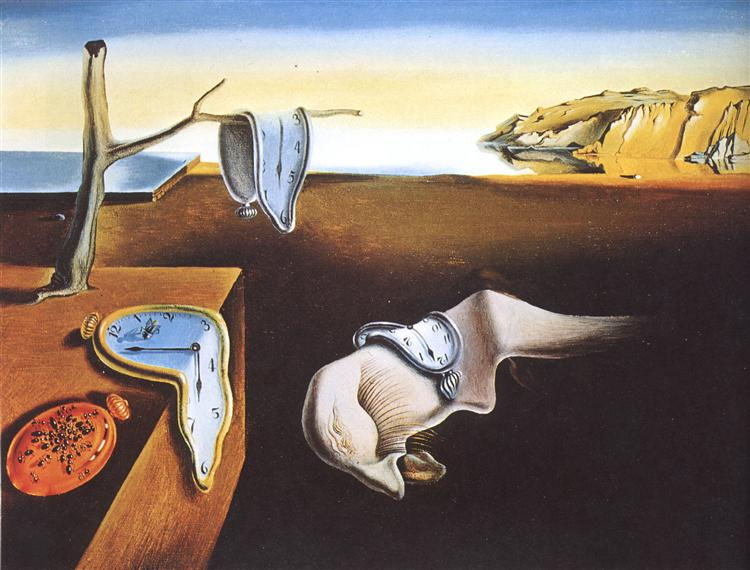
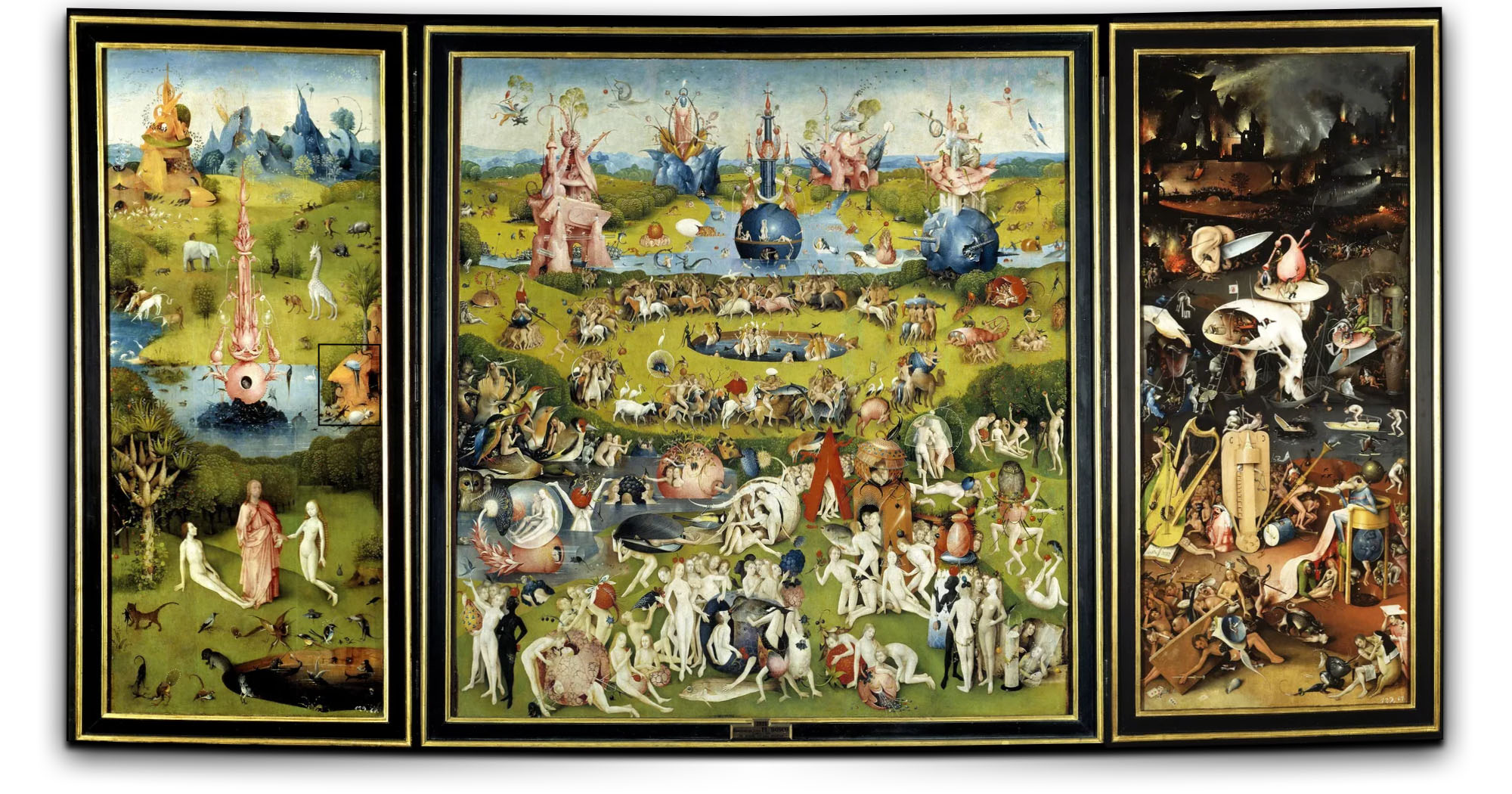
  • Hieronymus Bosch (1450-1516), directly influenced a number of surrealists including Salvador Dali. In particular the mysterious fish-like object at the centre of Dali’s “Persistence of Memory” is recognisable as a self-portrait by reference to his earlier works in which the same figure appears, and bears a remarkable similarity to the element in the left-hand panel of Bosch’s “The Garden of Earthly Delights” – comparison below
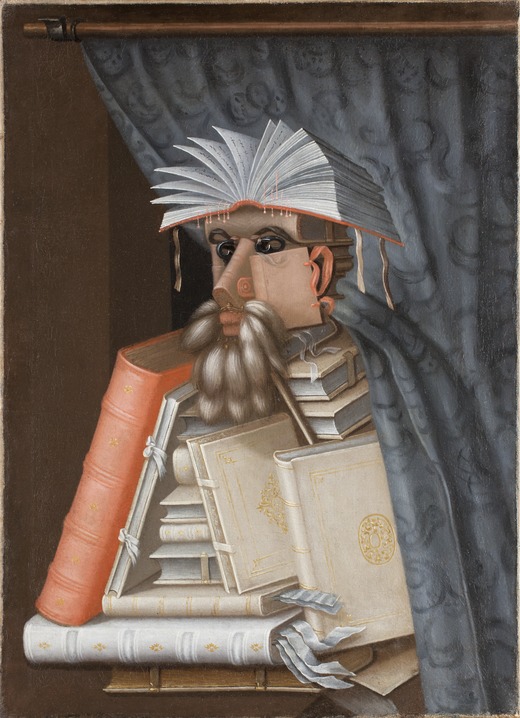
  • Giuseppe Arcimboldo (1527-1593), most famous for this portraits of people that are composed of other objects – “The Librarian”, 1566, right
Giuseppe Arcimboldo 1566 The Librarian

André Breton saw the above artists as visionary precursors to Surrealism. His 1924 Manifesto of Surrealism, which outlines the movement’s philosophical foundations, alludes to the uncanny and transformative qualities found in their work

Salvador Dali's 1931 "The Persistence of Memory"The Garden of Earthly Delights - proto-surrealism, Hieronymus Bosch, c. 1520
Dali’s “The Persistence of Memory” 1932Bosch’s “The Garden of Earthly Delights” c. 1510
  1. Paradoxically, this is a rational argument justifying irrationality. The true Dadaists were also anti-Data, but this again is a self-contradictory rational argument. ↩︎


Filed Under: Art Theory

“Female British Artist”

21/06/2024

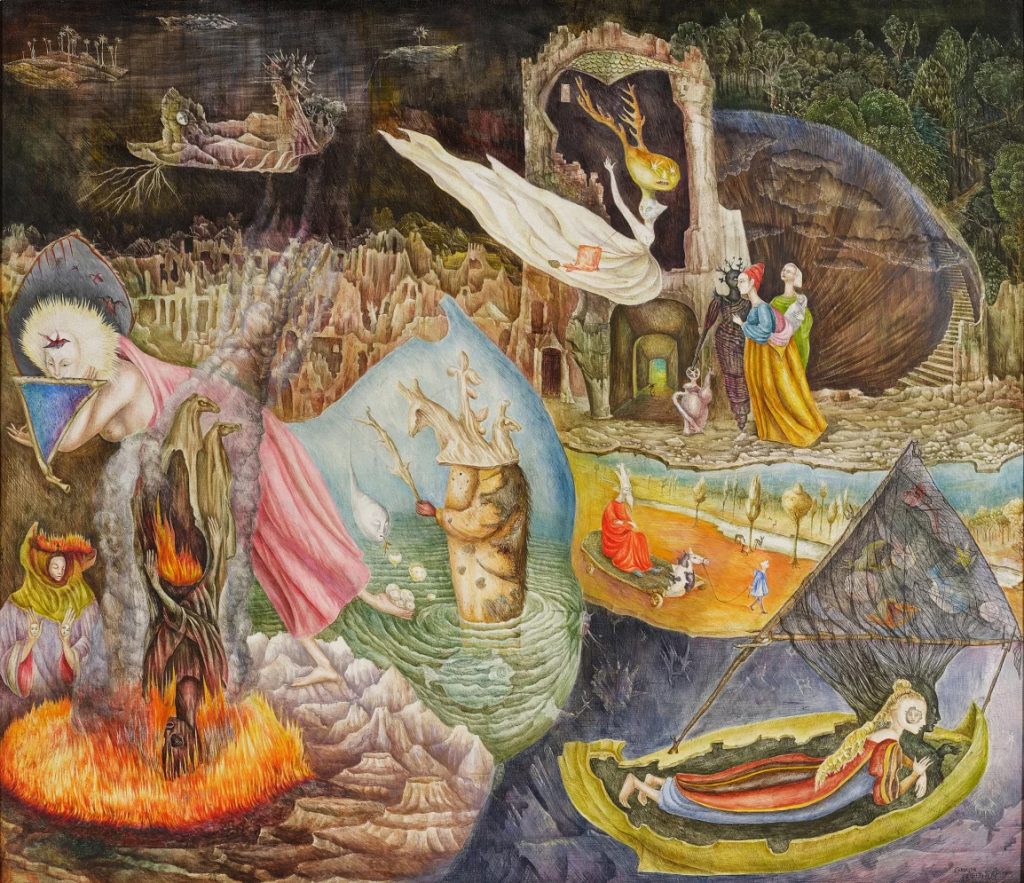
On the 15th April of this year Sotheby’s New York sold Leonora Carrington’s 1945 “Les Distractions de Dagobert” for $28.5m setting a new record for a female British artist. However, if we remove the words “female” and “British”, she doesn’t make Wikipedia’s list of the top 89 most expensive paintings. In fact, no women artists do

1945 Les Distractions de Dagobert - Gender inequality in women artists

Historical discrimination against women artists is an uncomfortable truth. We acknowledge past injustices, think things are better now, yet know there is more to do. However, the above news struck me as positive, and prompted me to investigate further

[Read more…]


Filed Under: Art Theory, Art Works Review

Most Influential Photographers and Other Artists

17/10/2023

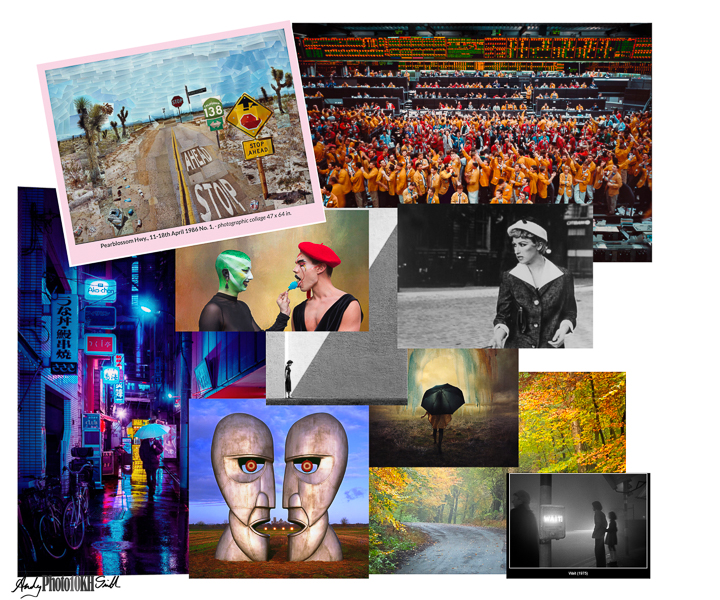
A quick run through of some of my most significant influences.

[Read more…]


Filed Under: Art Theory, Art Works Review

  • 1
  • 2
  • 3
  • 4
  • Next Page »

Copyright © 2026 · Design by Boutique Studio ·

Copyright © 2026 · Style Stereo on Genesis Framework · WordPress · Log in