To see the above photos in more details, click on the image above, to read about them click below
Top Image
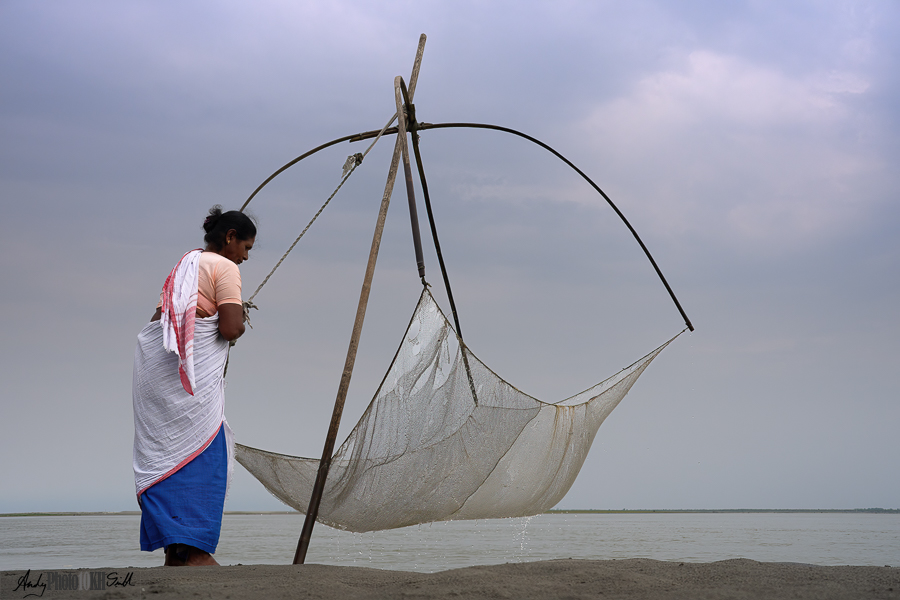
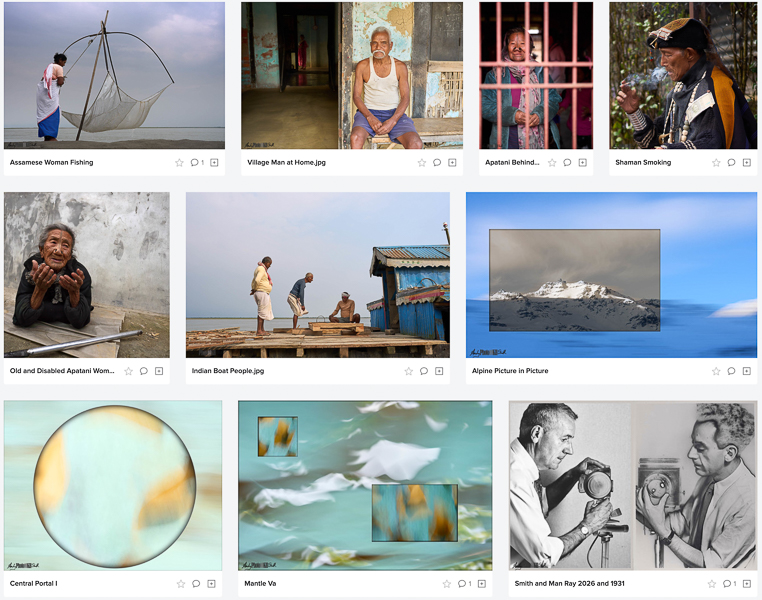
“Assamese Woman Fishing”
The above, along with the next 5 images, was shot on a trip to the Ziro Valley, in a very small group of 4 photographers led by Mark Seymore with the goal of shooting the Apatani Tribe at their annual Myoko Festival. The area has very little Western tourism and provided a unique opportunity for street/ travel photography. Although it is not my sweet-spot of long term interest, it was a great opportunity to shoot with some top-drawer photographers
Other Images
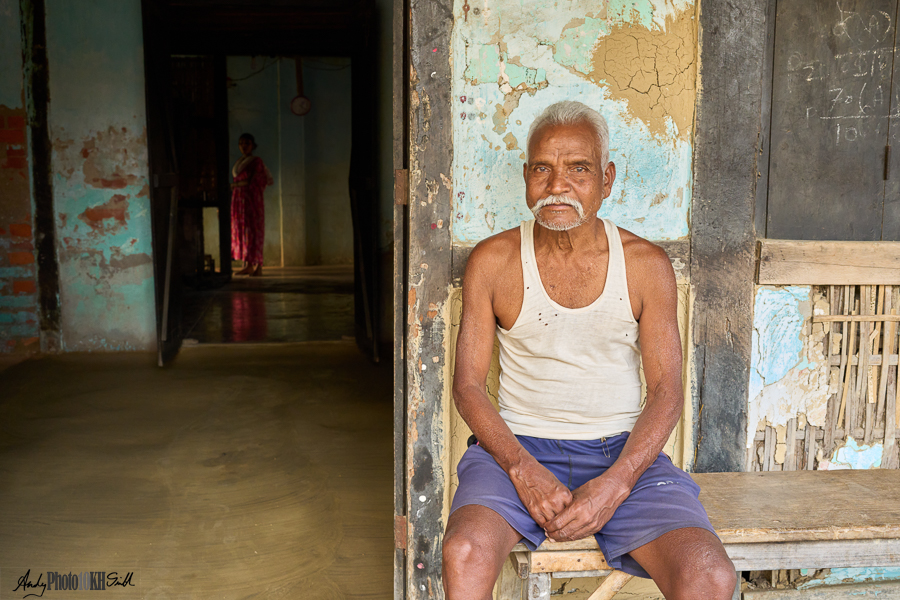
“Village Man at Home” woman in the background
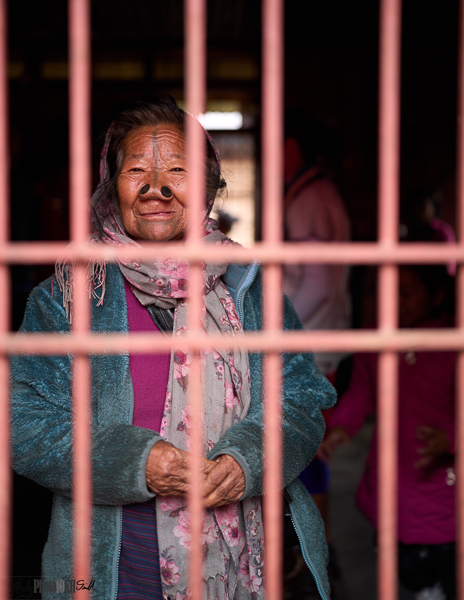
“Tribal Woman Behind Barred Window” shows the nose plugs and facial tattoos of the Apatani tribeswomen
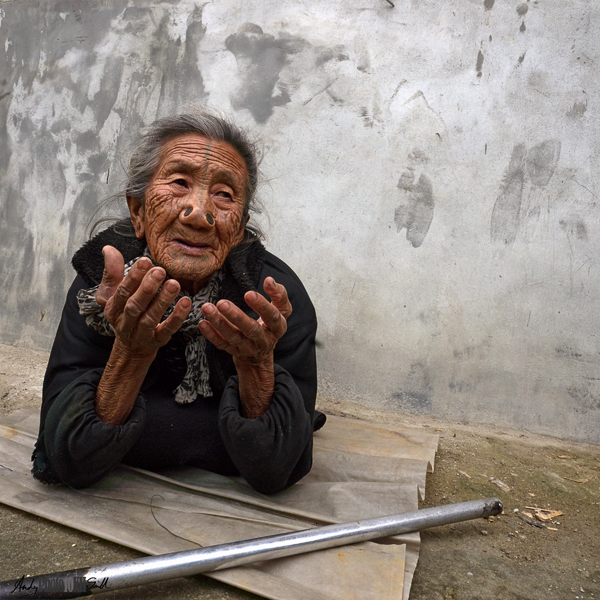
“Old Apatani Woman Lying on the Floor”
She’s outside her home, shown with the stick she uses for walking
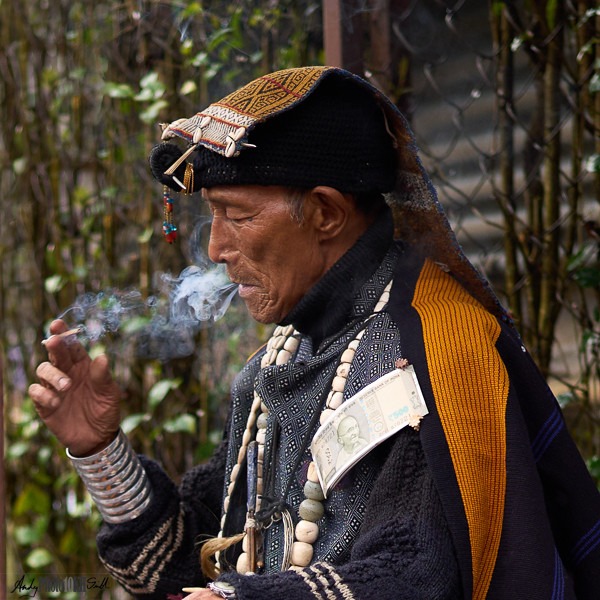
“Shaman Smoking”
Shot immediately prior to him performing the ritual sacrifice of about 20 large pigs
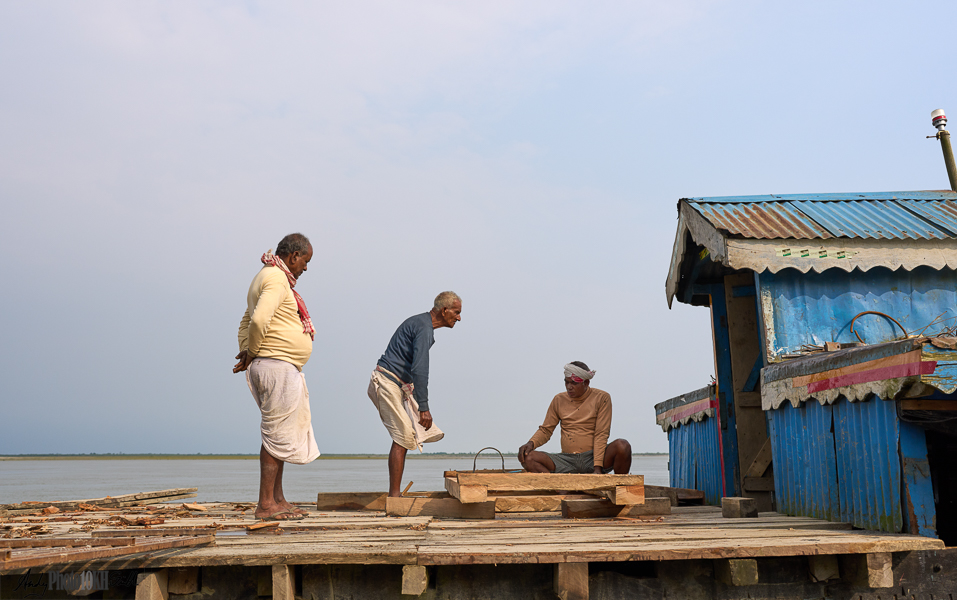
“Indian Boat People”
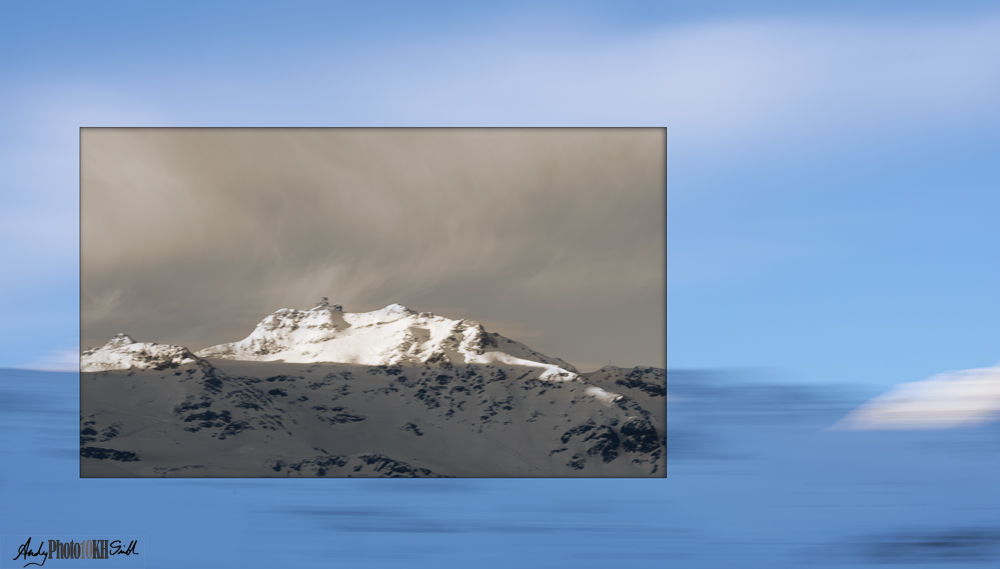
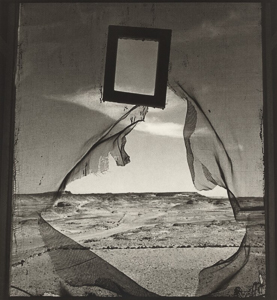
“Alpine Portal”, above. Both the ICM and straight images were shot in Val Thorens on the 3rd March, with the explicit intention of combining the images to make an, otherwise quite ordinary, snowscape more interesting. The idea was inspired by Lee Miller’s 1937 Portrait of Space, left, which although a single straight photograph, is lauded by surrealists as a transition from one state to another, and shows that photography, as well as painting, can depict both the conscious and unconscious. Miller’s photograph was a major influence on René Magritte who subsequently painted many doors and dreamlike transitions to an alternative or metaphysical space
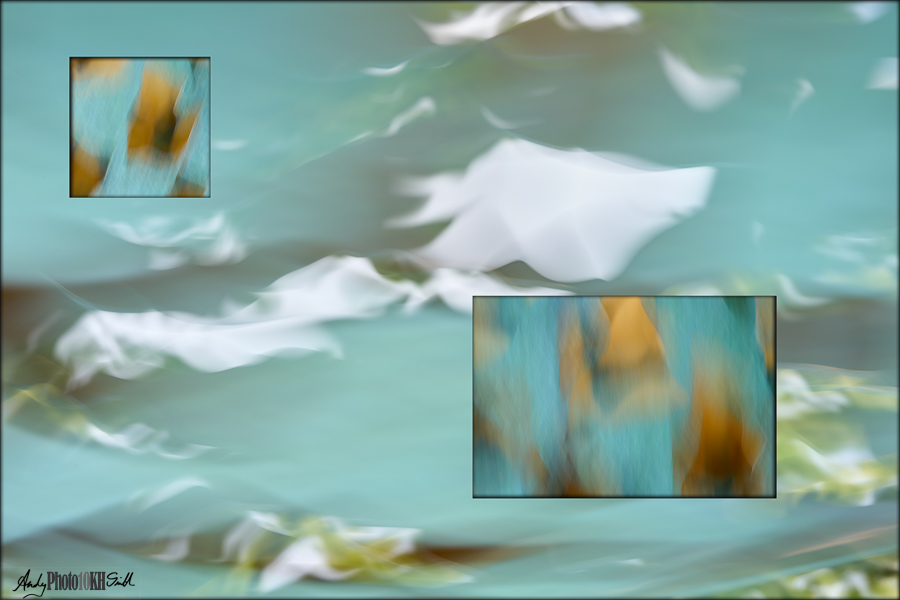
“Mantle Va”
Part of a series of portal pictures combining abstract ICM images of the same David Harbour, Mantle sculpture
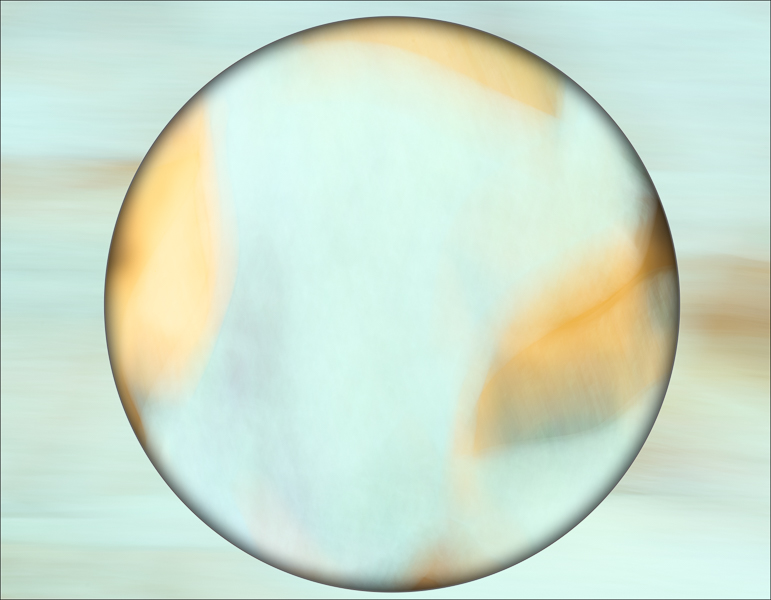
“Central Portal”
Created using the same technique as the Mantle image above but with a circular transition to the alternative space, and shading to give the impression of looking through a lens
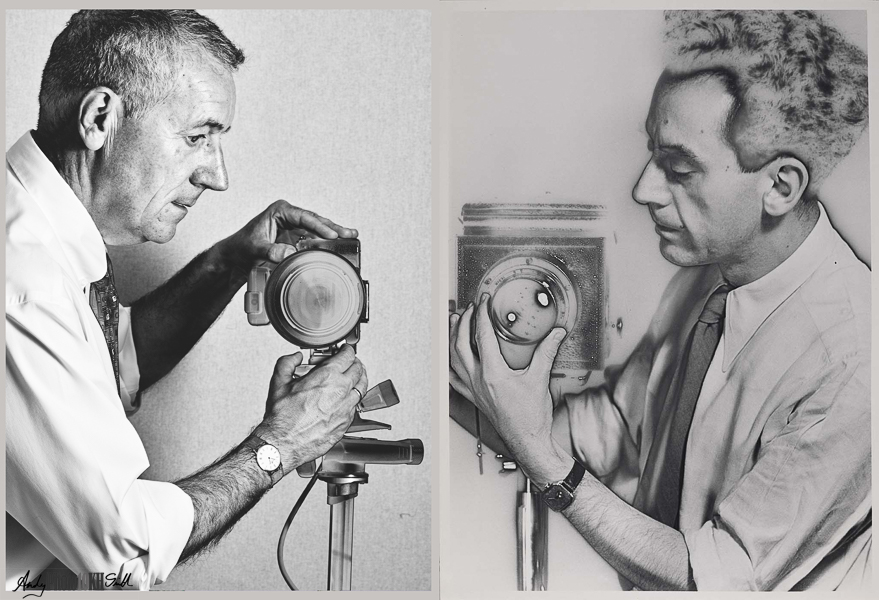
“Smith and Man Ray, 2026 and 1931”
Recreation of Man Ray’s solarised self-portrait for two of the Amersham Beyond challenges (Recreation of a famous picture, and Solarisation). I think it’s appropriate that Man Ray is looking at the camera, whereas I’m looking, out of shot, at the computer screen the camera is tethered to
Distinctions
It is now over a year since my Fellowship of the Royal Photographic Society. So perhaps time to reflect upon:
- the panel as submitted
- further work in this vein
- my future direction
(click on the image to the right for details of the FRPS submission)
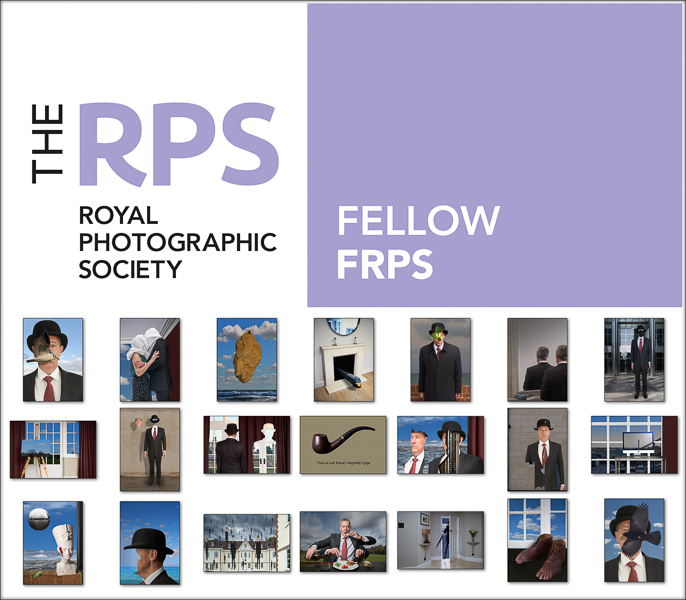
The panel as submitted
Whereas some images are stronger than others, all are of an acceptable quality, and I am particularly pleased with the central “This is not René Magritte’s Pipe” image which summarises the panel as a whole
I was slightly frustrated by the requirement to simplify the Statement of Intent to Magritte’s analysis of what we see hiding reality, as he said, “we always want to see that which is hidden by what we see.” More broadly I would have like to address the change in intellectual drivers over the last century. In the 1900s, the Surrealists were responding to the intellectual shocks of:
- Freud’s theory of the the unconscious and dream symbolism
- communism in Russia as a practical reality, and a desirable alternative to the rise of fascism in Europe
- Einstein’s theory of relativity proving that the world is more complicated than we previously thought
- Friedrich Nietzsche’s assertion that God is dead and one therefore has to take responsibility for one’s own morality
In the 2000s, the world faces existential threats in the form of:
- Nuclear proliferation in a politically unstable world
- the rise of artificial intelligence challenging us to define a role for ourselves in a world where super-human intelligence is cheap and abundant
- climate change as slow but sure self-destruction
- the unpredictable interactions between the above drivers
It’s an awareness of the above that drives my current work, although this is to date more of an aspiration than an achieved reality. Much of my time in March, for example, was concentrating on the 2 hour History of Surrealism I delivered to the Amersham Photographic Society
Further work in this vein
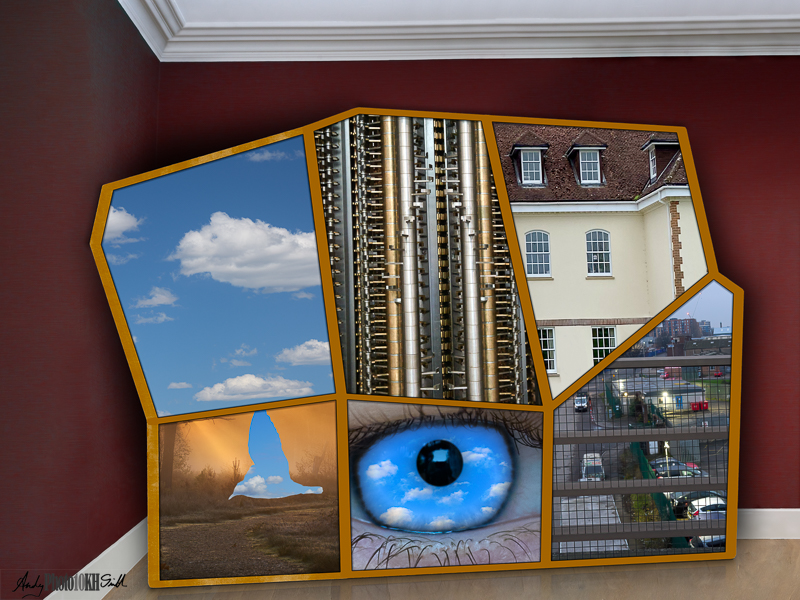
“The Empty Mask”, left, is a recreation of Magritte’s 1928 painting of the same name (Le Masque Vide), but using my images rather than Magritte’s. The purpose of the picture is to suggest that behind every image presented, there are others behind it
Whereas the title evokes a fear of the invisible, the picture as a whole is a paradoxical juxtaposition. The use of sub images that I’ve used as elements of other images makes the picture uniquely mine
Future direction
The scope is to use surrealist techniques to address the contemporary issues mentioned above
Whereas the British artist, Paul Nash, created his first surrealist works (e.g., “Harbour and Room”, 1936) almost as a homage to René Magritte, his later work (e.g.,”Landscape from a Dream”, 1938) was much more individual and embraced a wider surrealist ideology. I see myself doing much the same thing
Philosophers and Concepts
Although most were not new to me, I spent a good deal of time this quarter studying them
Sigmund Freud
Provided the most significant shock to the art world since the start of the 20th Century. The idea that “we are not in control of our thoughts” was revolutionary
Theories of the unconscious which underpin André Breton’s definition of Surrealism as “pure psychic automatism”
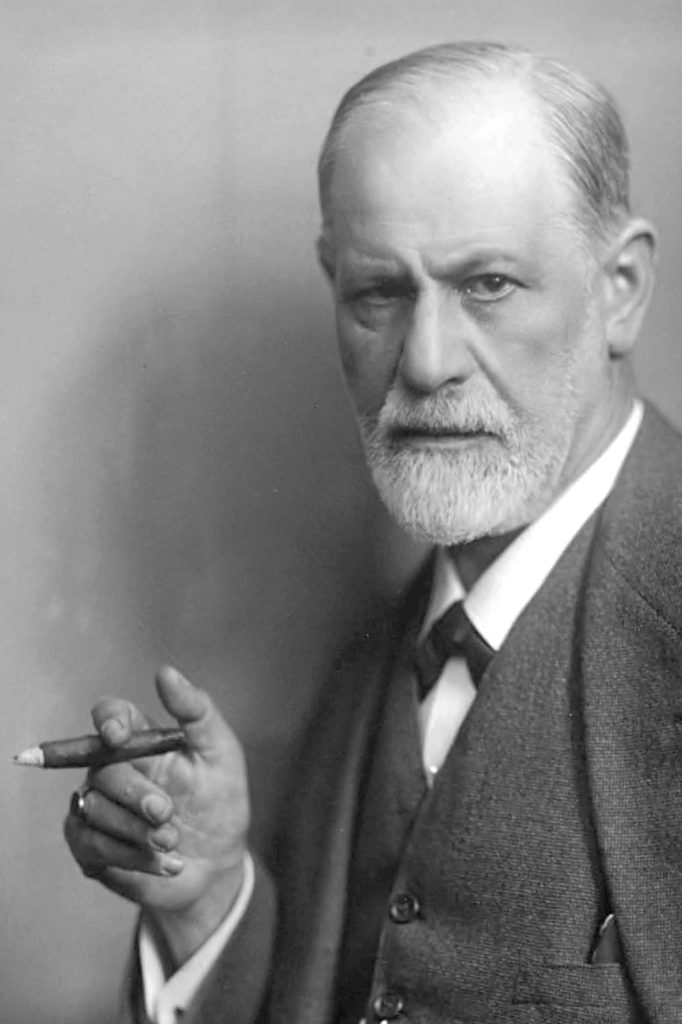
Carl Jung
I read his late-life autobiography, “Memories, Dreams, Reflections”, which he never wanted included in his collection of published works. The book deals with his spiritual feelings: he absolutely believed in god but in a practical way, rejected/ despised organised religion, was a life-long devotee of the occult and alchemy, and “synchronicity” which he was a proof “the interconnectedness of all things” (rather than merely random chance). His scientific works were more guarded and at most merely left room for an element of the supernatural or metaphysical
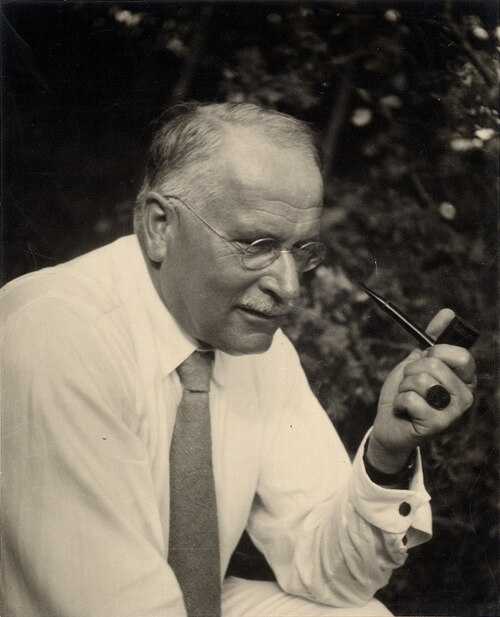
Jung’s major refinement of Freud’s theories was the addition of the collective unconscious beneath that of the individual unconscious consisting of an inherited structure of predispositions to perceive, imagine, feel, and behave in certain characteristic ways. The collective unconscious is populated with archetypes, such as the hero, mother and shadow, that are seen across cultures as the elements of myths which are remarkably similar, suggesting that they are part of a basic human psychology. The modern equivalent/ parallel of the archetype is the “evolved cognitive template”
The Paulina Karpidas sale at Sotheby’s, which I viewed on the 8th September 2025, contained an extensive collection of books by and about Jung, which is significant as she is/ was a major surrealist collector favouring Jung above other psychoanalyst philosophers
Jacques Lacan
I was introduced to Jacques Lacan by Mark Fisher in his book “Capital Realism” (my No. 1 top book as of 2025) for whom he was a major influence, I read “Lacan” by Lionel Bailly which is an accessible introduction to this famously, and intentionally, difficult author (Lacan felt that Freud’s work was too easy to read and was misunderstood by non-professionals)
Lacan developed the ideas of Freud and Jung and philosophised psychoanalysis. Folding in the concepts and theories of:
- Hegel and Marx to create, in particular a theory of desire:
“Desire is the desire of the Other” - Linguistics and Structuralism suggesting that the mind (conscious and unconscious) is structured like a language
- Mathematics:
- the relationship between conscious and unconscious is like the two sides of a Mobius Strip
- The Real, The Symbolic and The Imaginary, are held together in a Borromean knot such that if any ring is cut, all elements are separated
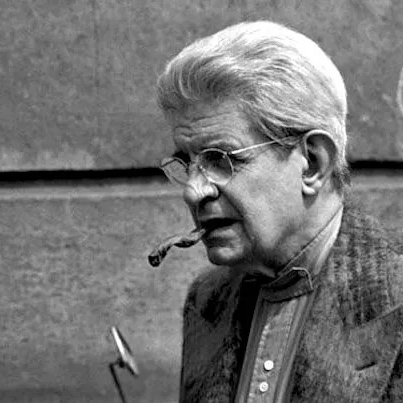
Although André Breton and Jacques Lacan moved in overlapping intellectual circles in Paris, they were not close collaborators and in some ways Lacan was a critic of the surrealist vision of free expression of the unconscious, believing that this misses the point of it being structured like a language and mediated by the Symbolic (law, language, etc.)
Alexandre Kojève
Lacan considered Kojève to be his only true master [teacher]. Kojéve was primarily known for his Marxist interpretation of Hegel and Heidegger. In particular the former’s Master-Slave Dialectic: “Self-consciousness arises through a struggle for recognition in which one consciousness becomes master and the other slave; yet the master’s independence is hollow, while the slave, through labour and transformation of the world, achieves a deeper, mediated self-consciousness”
Jacques Vaché (1895-1919)
known for his general indifference and wearing a monocle, a major influence in the start of the surrealist movement, took his own life at the age of 23 from an opium overdose. André Breton said “in literature it is to Jacques Vaché that I owe the most”
New Artists
15th March: I read Wassily Kandinsky’s short but seminal 1914 book “Concerning the Spiritual in Art”
8th May: the brothers, Naum Gabo and Antoine Pevsner – Constructivist painters and sculptors
29th May: André Derain, the co-founder of Fauvism with Cezanne and Matisse (1905-1908), and a contemporary of Picasso at the same time, i.e., in the run up to the discovery of cubism c. 1910. Was scorned by his peers for turning his back on the avant-garde and returning to a neoclassical style of painting between the wars. Although he did provide illustrations for a book written by André Breton. Then really sold out as a Nazi collaborator in Paris during WWII actively creating propaganda visuals for the invading force and taking part in a highly publicised tour of the Fatherland
Notes:
Recent blog posts: